Top 5 Tips for Choosing the Best Marine Battery?
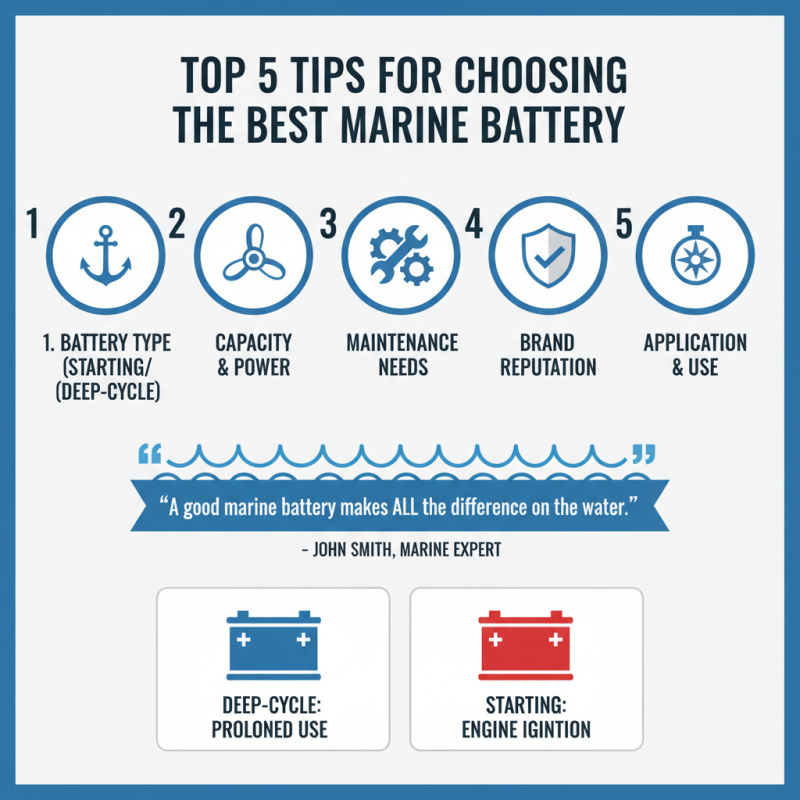
Choosing the right Marine Battery is crucial for boat enthusiasts. Expert John Smith, a veteran in the marine industry, emphasizes, "A good marine battery makes all the difference on the water." The variety of marine batteries available can be overwhelming. Each type serves specific needs, making it essential to select wisely.
Marine batteries differ in capacity, weight, and lifespan. For instance, deep-cycle batteries are designed for prolonged energy use. In contrast, starting batteries deliver high bursts of power for ignition. Understanding these distinctions is vital for optimizing your vessel's performance.
Evaluating options goes beyond specs. Consider factors like application, maintenance needs, and manufacturer's reputation. While certain brands promise reliability, it's wise to research firsthand experiences. Always expect variations in quality and performance. Don't settle for the flashy advertisement. Seek clarity to make an informed decision that enhances your boating adventures.
Understanding the Different Types of Marine Batteries Available Today
When choosing a marine battery, it's essential to understand the different types available today. The most common options are lead-acid, lithium-ion, and AGM batteries. Each type has unique characteristics that affect their performance and suitability for marine use.
Lead-acid batteries are traditional and widely used. They are cost-effective but can be heavy and require regular maintenance. AGM (Absorbent Glass Mat) batteries, a subtype of lead-acid, offer better performance in deep-cycle applications. They are sealed and can withstand vibrations, making them reliable for rough marine conditions.
Lithium-ion batteries have gained popularity due to their lightweight design and longer lifespan. They charge faster and offer higher energy capacity. However, they come at a higher price. Some users appreciate their efficiency, while others question their durability in extreme marine environments. Understanding these differences can help you choose the right battery for your needs, balancing cost, weight, and performance.
Evaluating the Capacity and CCA Ratings for Optimal Performance
When choosing a marine battery, understanding capacity and Cold Cranking Amps (CCA) is crucial. Capacity refers to how much energy the battery can store. It’s measured in amp-hours (Ah). A higher capacity means longer usage time for devices like fish finders or radios. You want a battery that can hold up against long days on the water.
Cold Cranking Amps indicates the battery's ability to start your engine in cold conditions. A higher CCA is beneficial in cooler climates. For example, if you frequently sail in colder waters, ensure your battery has adequate CCA ratings. This capability can prevent potential issues when you need your engine to start.
While focusing on these specifications, don’t overlook warranty and cycle life. Some batteries may have high ratings but short lifespans. Research reliability and read user reviews. This information can guide your choice, ensuring you get dependable performance. Aim for a balance between capacity, CCA, and durability for the best marine battery experience.
Assessing Battery Lifespan and Warranty Considerations for Marine Use
When choosing a marine battery, assessing lifespan and warranty is crucial. Marine batteries are different from regular car batteries. They often endure harsh conditions and must provide reliable performance. According to the Battery Council International, marine batteries can last anywhere from 3 to 8 years, depending on usage and maintenance.
Consider the warranty offered by the manufacturer. A longer warranty often reflects greater confidence in the product's durability. Typical warranties range from one to five years. A study from the National Marine Manufacturers Association shows that batteries with a minimum two-year warranty tend to outperform those with shorter guarantees. This indicates that investing in a battery with a better warranty can lead to long-term savings.
Additionally, pay attention to discharge cycles. Many marine batteries can handle about 200-300 cycles. Opting for a battery with higher cycle ratings can reduce the need for replacements. This not only saves money but also minimizes environmental impact. Remember to review your specific needs and usage patterns before making a decision.
Identifying the Importance of Maintenance and Charging Practices
Choosing the right marine battery is crucial for any boat owner. Maintenance and charging practices play a significant role in the battery's lifespan and performance. Proper care can extend battery life by up to 30%, according to industry studies. Regular maintenance includes cleaning battery terminals and checking connections. These small steps can prevent corrosion and ensure optimal power delivery.
Charging practices are equally important. A report from the Marine Battery Council states that improper charging can reduce a battery's capacity by nearly 50%. It's vital to use the correct charger, as overcharging can lead to overheating and premature failure. Monitoring the state of charge with a voltmeter can provide insights on when to recharge.
Many boat owners overlook the importance of temperature. Extreme temperatures can impact battery performance significantly. Batteries tend to lose capacity in cold weather, while heat can accelerate degradation. Regularly checking the electrolyte levels in flooded batteries is essential for maintaining performance. These practices not only enhance reliability but also ensure safety while on the water.
Comparing Brand Reputation and User Reviews in Marine Battery Selection
When selecting a marine battery, brand reputation plays a crucial role. Established brands often have a track record of reliability. Look for companies with years of experience in the marine industry. They tend to understand the specific needs of boaters better. User reviews can provide invaluable insights. These reviews often highlight performance in real-world situations.
Reading through various user experiences can help identify common issues. Some brands might excel in longevity but fall short in customer service. Others may offer great support but have shorter battery life. It's essential to balance performance and service to find the best fit for your needs.
Not all popular products are perfect. Some users may report inconsistent quality over time. Investigating these discrepancies can guide your decision. Sometimes, reading between the lines in reviews reveals patterns. Pay attention to both praise and criticism to make an informed choice. This approach helps ensure that you select a marine battery that meets your boating demands effectively.