Industries
Get direct access to our extensive portfolio of optical products and specialist technical expertise.

The optical modules market is entering 2026 with higher speeds, tighter power budgets, and sharper deployment choices. Data centers need dependable links between servers, switches, and artificial intelligence clusters. A 400G module may suit a regional cloud facility, while 800G and emerging 1.6T designs target denser workloads. The difference is practical. It affects cabling, cooling, rack space, and operating costs.
LightCounting founder Vladimir Kozlov has observed, “Optical communications is increasingly driven by data center demand.” That perspective helps frame this guide. The leading optical modules in 2026 will include pluggable 800G transceivers, 400G DR4 and FR4 modules, active optical cables, coherent modules, and early 1.6T solutions. Co-packaged optics may gain attention, but adoption will remain cautious. Thermal management is still difficult. Manufacturing consistency matters more than impressive laboratory results.
Real deployments rarely follow a perfect product chart. Engineers compare reach, connector density, interoperability, and field replacement time. They also examine supplier qualification and failure data. A module that saves power but causes installation delays may not deliver real value. That is an uncomfortable point. Faster is not always better.
This article evaluates the top optical modules for 2026 through performance, reach, power consumption, standards support, and practical availability. It also considers where each design fits. Some forecasts may age quickly, especially around 1.6T adoption. Readers should verify vendor specifications before making purchasing decisions.
What Are the Top Optical Module Types in 2026?
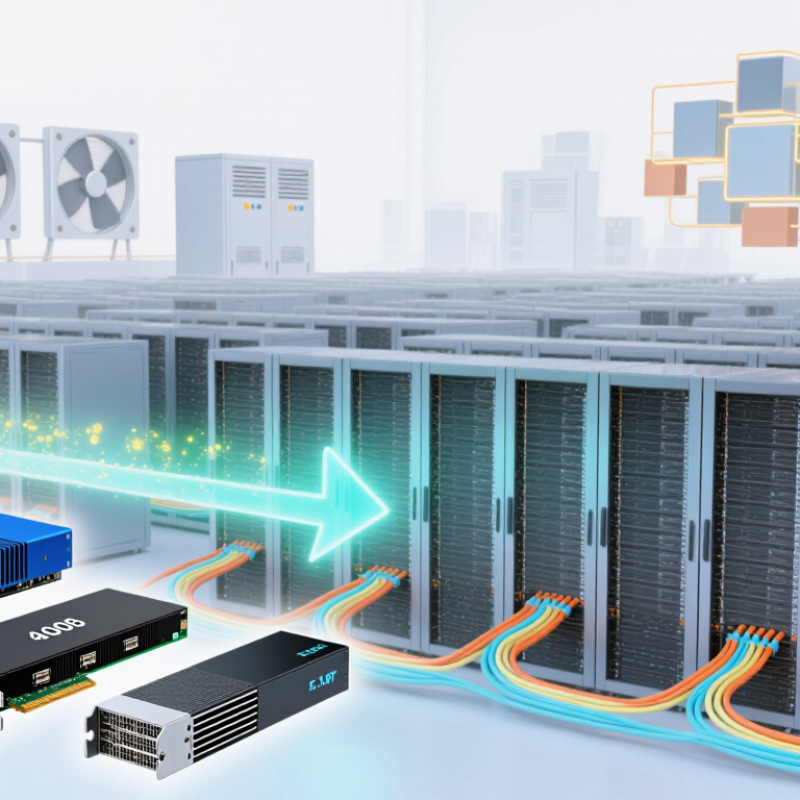
An optical module converts electrical signals into light for high-speed data transmission. It sits inside switches, servers, and data-center interconnects. In 2026, this small component matters more than ever. IDC projected global AI infrastructure spending at about $235 billion in 2024. That growth increases pressure on bandwidth, power efficiency, and network stability.
800G modules are becoming practical for large AI clusters. Common formats include 800G DR8, 2×FR4, and 800G 2×LR4. They support short and medium-reach connections while limiting cable congestion. Emerging 1.6T modules target next-generation switches, although deployment remains selective. Coherent 400ZR and 800ZR modules also serve data-center interconnects across longer distances. LightCounting’s market analysis has linked AI networking demand with rapid optical-transceiver growth. The exact pace remains uncertain. Forecasts can age quickly.
Tips: Match the module to distance, fiber type, port speed, and thermal limits. Check host-system compatibility before purchasing. A higher data rate is not automatically better. In field planning, power per transmitted gigabit often reveals the real cost. Engineers should also examine interoperability testing, error performance, and future upgrade paths. The overlooked detail is heat. A dense 800G installation can need stronger airflow and more careful rack design. Preliminary trials may expose these limits earlier than a spreadsheet.

In 2026, the most widely used optical modules are not always the newest ones. Installed networks still rely heavily on 10G SFP+ and 25G SFP28 transceivers. These compact modules suit enterprise switches, storage links, access aggregation, and short data-center runs. Low power use and familiar maintenance keep them practical. That matters.
For higher-capacity links, 100G QSFP28 remains a common workhorse in data centers and metropolitan networks. 400G QSFP56 and QSFP-DD modules are expanding rapidly where server density and east-west traffic are high. Eight-lane electrical designs can simplify migration, but thermal limits demand careful rack planning. 800G modules are gaining attention in artificial-intelligence clusters and hyperscale fabrics. They are important, not yet universal. Fiber reach also changes the choice. Single-mode options support longer connections, while multimode versions can reduce costs inside buildings.
Coherent modules and tunable DWDM modules remain widely used in telecom and long-haul transport. Pluggable coherent designs are making some optical transport equipment smaller and easier to scale. Still, module popularity varies by region, port speed, distance, and power budget. My earlier assumption that 800G would dominate every new build was too broad. Real deployments are messier. Engineers should verify interoperability, lane mapping, host support, connector type, and measured temperature before ordering. Published specifications help, but field records reveal problems that laboratory sheets may miss.
| Optical Module Type | Typical Aggregate Data Rate | Common Form Factor | Typical Reach | Primary 2026 Deployment | Fiber and Wavelength Profile | Relative Adoption in 2026 |
|---|---|---|---|---|---|---|
| 100G Short-Reach Ethernet | 100 Gb/s | QSFP28 | Up to approximately 100 m over multimode fiber; longer distances are possible with single-mode variants | Leaf–spine connections, enterprise data centers, storage networks, and access aggregation | Multimode versions commonly use parallel optics; single-mode versions commonly use duplex or parallel single-mode fiber | Very high |
| 400G Parallel-Optics Ethernet | 400 Gb/s | QSFP-DD or OSFP | Approximately 100 m over multimode fiber; commonly 500 m to 2 km over single-mode fiber, depending on the optical design | Data-center spine links, high-density server fabrics, and short interconnects | Uses multiple optical lanes; multimode and single-mode implementations are available | High |
| 400G Single-Wavelength Ethernet | 400 Gb/s | QSFP-DD or OSFP | Commonly 2 km to 10 km, depending on the optical standard | Data-center interconnects, metro links, and longer leaf–spine or campus connections | Typically uses single-mode fiber with four-level pulse-amplitude modulation and either four lanes or one higher-speed optical wavelength | High |
| 400ZR and 400ZR+ Coherent | Approximately 400 Gb/s | QSFP-DD, OSFP, or compact coherent pluggable designs | Roughly 80 km for 400ZR; longer distances are possible with enhanced coherent modes and suitable line systems | Data-center interconnects and metro-scale optical transport | Single-mode fiber using coherent detection, advanced modulation, and wavelength-division multiplexing | Growing quickly |
| 800G Ethernet | 800 Gb/s | OSFP or QSFP-DD800 | Commonly 100 m to 2 km in data-center applications; longer-reach variants are also available | Artificial-intelligence and high-performance-computing clusters, spine switches, and large-scale data-center fabrics | Usually based on eight 100G-class electrical and optical lanes or equivalent higher-speed lane architectures | High in new high-density deployments |
| 800G Coherent Pluggable | 800 Gb/s | High-power OSFP or comparable coherent pluggable form factor | Typically metro and regional distances; actual reach depends on modulation, channel spacing, and fiber conditions | High-capacity data-center interconnects and optical transport networks | Single-mode fiber with coherent technology and wavelength-division multiplexing | Growing quickly |
| 100G Coherent Pluggable | 100 Gb/s | CFP2-DCO or compact coherent pluggable form factor | Commonly tens to several hundred kilometers, depending on the optical line system | Metro networks, regional transport, mobile backhaul, and network upgrades | Single-mode fiber using coherent modulation and digital signal processing | High in transport networks |
| 200G Coherent Pluggable | 200 Gb/s | Compact coherent pluggable form factor | Typically metro to regional distances, subject to link budget and fiber quality | Metro transport, aggregation networks, and capacity upgrades where power and port density are important | Single-mode fiber with coherent detection and digitally optimized modulation | High in metro transport |
| 1.6T Ethernet | 1.6 Tb/s | Next-generation OSFP-class or other high-density pluggable designs | Initially focused on short-reach data-center links, generally from tens of meters to a few kilometers | Early artificial-intelligence clusters, next-generation switching platforms, and experimental high-bandwidth fabrics | Expected to use multiple 200G-class lanes or equivalent optical lane architectures | Emerging |
Data rate and transmission distance now drive optical module selection more than module size alone. LightCounting’s 2024 Optical Transceiver Market Report identifies 800G and higher-speed modules as the fastest-growing data-center segments through 2028. For short links inside a rack or adjacent rows, 400G DR4 modules typically reach 500 meters over parallel single-mode fiber. 400G FR4 extends the practical reach to about 2 kilometers, while LR4 can approach 10 kilometers.
The choice is physical, not fashionable. Distance changes everything.
For newer 800G deployments, DR8 suits short interconnects, while 2×FR4 designs support roughly 2 kilometers. Longer data-center interconnects may require coherent pluggable modules, often spanning 80 to 120 kilometers, depending on fiber quality and network margins. Cignal AI’s 2025 optical communications analysis reports continued investment in coherent pluggables for data-center interconnection.
Heat matters too. Higher-rate modules can increase front-panel power, cooling demand, and operational cost. A lower-rate module may be wiser when traffic growth is uncertain. I have seen planning models overvalue peak bandwidth and undervalue fiber routes. That is an expensive assumption. Selecting by distance first, then rate, usually produces a more reliable design. Yet even this rule needs review when latency, optical loss, and future upgrades conflict.
Pluggable optical modules remain the most flexible choice in data centers and enterprise networks. Technicians can replace them without changing the entire switch. This matters when traffic grows unevenly across racks. Short-reach versions often connect servers within a facility, while longer-reach versions serve campus and regional links. Their removable design also simplifies testing, inventory control, and field repairs. However, front-panel space can become a serious limitation in very dense systems.
Coherent optical modules are deployed where capacity must travel farther. They support metro networks, data-center interconnects, and long-distance transport systems. Instead of relying only on direct detection, they use advanced modulation and signal processing. This enables higher bandwidth across fiber routes that may span hundreds of kilometers. Power, thermal load, and optical engineering still require careful planning. More capacity is not automatically better.
Embedded optical modules sit inside network equipment or close to switching silicon. They are increasingly considered for high-density computing clusters, large-scale switching platforms, and specialized telecom equipment. Short electrical paths can reduce signal loss and improve energy efficiency. Yet embedded designs make maintenance harder because a failed optical section may require deeper equipment service. The boundary is not clean. In some deployments, a hybrid architecture works best: pluggables provide service flexibility, coherent modules handle distance, and embedded optics support extreme port density. Early designs often underestimate airflow, connector access, and future replacement needs. That is where practical reviews matter.
Optical module selection now depends on network distance, speed, fiber type, and operating conditions. Short-reach modules suit data center connections across a few hundred meters. Parallel multimode designs can reduce cost inside dense server halls. Single-mode modules support longer links, including campus, metro, and regional networks. Higher-speed options, such as 400G and 800G modules, serve demanding artificial intelligence and cloud workloads. However, speed alone should not determine the purchase.
Check the required reach carefully. A module rated for 10 kilometers may perform poorly on a short, heavily patched link. Confirm connector types, wavelength compatibility, lane configuration, and host-device support. Power consumption also matters. A small difference per module becomes significant inside a fully populated rack. Thermal testing is essential, especially when airflow is restricted. Digital diagnostics can expose temperature, voltage, optical power, and warning signals before failures become visible. Standards compliance improves interoperability, but field testing remains valuable. Specifications can look perfect on paper.
Tips: Build a simple selection table before ordering. Record speed, distance, fiber, power, temperature, and warranty requirements. Test a sample under realistic traffic and airflow conditions. Keep spare units from the same qualification batch when possible. I have seen teams overbuy capacity, then discover that switching hardware cannot use it. That mistake is expensive, and sometimes avoidable. Also review future expansion, but do not pay heavily for capacity that the network may never need.