Industries
Get direct access to our extensive portfolio of optical products and specialist technical expertise.
The 2026 Liquid Nitrogen Dosing System market is becoming more precise, automated, and application-driven. Food, beverage, pharmaceutical, and chemical manufacturers increasingly require controlled nitrogen dosing for oxygen reduction, package stability, and extended shelf life. MarketsandMarkets reports continued growth in industrial gas demand, while Grand View Research identifies food packaging and healthcare as major liquid nitrogen application areas. These reports provide useful direction, but market estimates vary by methodology and regional coverage.
A reliable supplier must offer more than a dosing valve. Buyers should examine dosing accuracy, nitrogen consumption, line speed, PLC integration, sensor performance, and hygienic design. A filling line running 600 bottles per minute cannot tolerate unstable pressure or delayed feedback. Dr. John E. Fesmire, a recognized cryogenic engineering specialist, has emphasized that “measurement is the foundation of cryogenic engineering.” That principle applies directly to Liquid Nitrogen Dosing System selection. Temperature probes, flow monitoring, and documented validation deserve close attention.
The strongest suppliers also demonstrate field experience. They should provide installation records, maintenance procedures, operator training, and measurable performance data. ISO certification helps, but it does not replace practical evidence. Some supplier rankings rely heavily on company claims. That is a weakness worth questioning. This 2026 overview therefore compares technical capability, safety practices, customization, service coverage, and total operating cost. It also considers a difficult issue: the cheapest system may create higher nitrogen losses, inconsistent dosing, and costly production interruptions.
Liquid nitrogen dosing systems meter cryogenic nitrogen into containers, products, or process lines. The liquid arrives near minus 196 degrees Celsius. A controlled dose quickly becomes gas and occupies far more volume. That expansion can create internal pressure in sealed packages. It may also displace oxygen in selected processes. The purpose is controlled cooling, inerting, or pressure adjustment, not simple spraying.
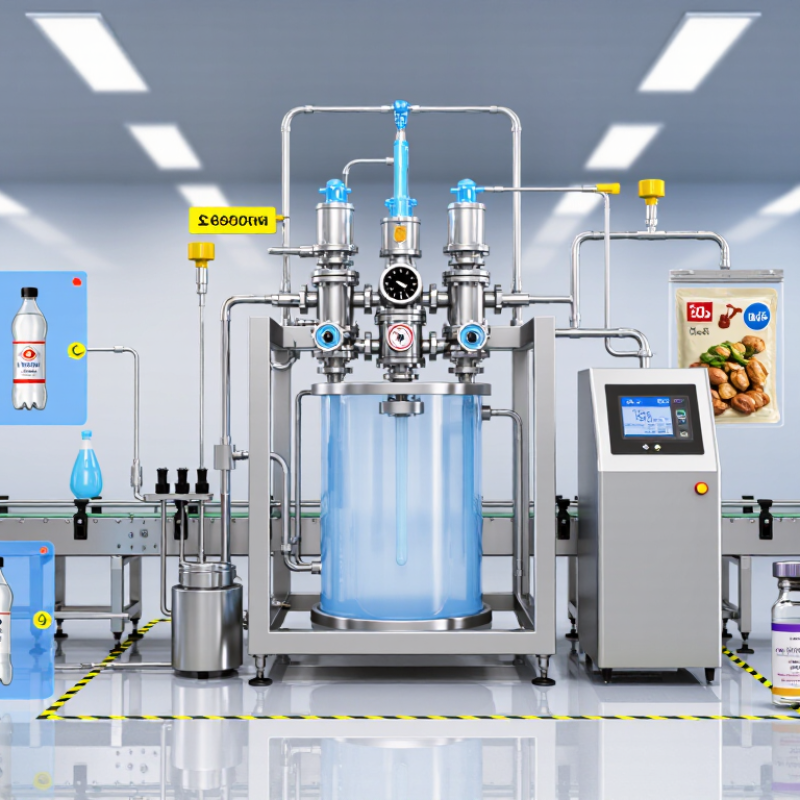
A typical system includes a vacuum-insulated storage vessel, transfer piping, a dosing valve, and a nozzle. A pressure regulator stabilizes flow, while a flowmeter or load cell checks the delivered amount. Temperature and pressure sensors provide operating data for the controller.
The PLC adjusts valve timing against line speed and container position. Photoelectric sensors detect each container before dosing begins. Venting and pressure-relief devices help manage unwanted gas buildup. Materials must tolerate cryogenic temperatures without becoming brittle.
In production, small timing errors become visible quickly. An uneven dose can distort a lightweight bottle or leave insufficient headspace. Operators should inspect nozzle alignment, insulation, sensor response, and valve closure during routine checks. Clean, dry connections matter because moisture can freeze around the outlet. A credible supplier should document test methods, calibration intervals, and emergency shutdown behavior. Experience matters here. Still, a perfect specification does not guarantee perfect dosing. Container shape, ambient temperature, and conveyor vibration can change real results. Pilot trials and recorded measurements often reveal assumptions that drawings miss.
Liquid nitrogen dosing adds a measured cryogenic dose before a container is sealed. A dosing head releases tiny droplets into each package. The liquid quickly absorbs heat and changes into gas. This expansion can create internal pressure and improve container rigidity. It may also reduce oxygen exposure in selected packaging processes.
The system depends on accurate timing. A controller coordinates the dosing valve with conveyor speed and container position. Photoelectric sensors confirm each package before the nozzle fires. Some lines use weighing checks, pressure monitoring, or vision inspection to verify consistency. Small errors matter. An excessive dose can distort lightweight containers or affect seal performance. An insufficient dose may provide little structural benefit.
In practical installations, operators must match the dose with package volume, material thickness, and production speed. Insulation around the supply line helps limit unwanted evaporation. The nozzle also needs regular inspection because frost can change the spray pattern. I have found that stable results often come from simple adjustments, not aggressive settings. The process is not flawless. Temperature changes, vibration, and inconsistent container placement can still create variation. Good technicians record these changes and retune the system carefully. Safety training, suitable ventilation, and controlled handling remain essential around cryogenic equipment.
Choosing a liquid nitrogen dosing system supplier in 2026 requires more than comparing purchase prices. Start with measurable dosing performance. Ask for accuracy data at your target container speed, fill volume, and nitrogen pressure. A supplier should provide test records, calibration methods, and clear operating limits. Small errors matter. A 0.1 milliliter variation can affect package pressure and product stability. Request a live trial with your own containers, not only polished laboratory results.
Examine the equipment’s construction and control system. Cryogenic lines should use suitable materials, insulated connections, and accessible valves. Sensors need stable readings near production heat and vibration. Check whether the controller records dose trends, alarms, and downtime. Integration matters too. Confirm communication with your filling machine, reject station, and plant monitoring software. Ask how quickly operators can adjust settings without unsafe exposure. The best specification is useless if the interface confuses a trained operator.
Supplier reliability appears after installation. Review technician qualifications, spare-parts availability, response times, and preventive-maintenance instructions. Request references from facilities with similar speeds and container formats. Verify training documents and change-control support for future upgrades. Do not accept vague promises. One overlooked detail is cleaning access around the nozzle, where frost and residue may collect. No supplier is perfect; successful trials can still miss seasonal humidity or shift-level habits. Leave room for retesting. That possibility deserves a second test.
2026 Top Liquid Nitrogen Dosing System Suppliers
Supplier profiles now deserve closer attention than simple product rankings. Established manufacturers usually provide dosing heads, insulated tanks, control panels, and commissioning support. Some focus on high-speed beverage lines. Others design compact systems for food, chemical, or pharmaceutical packaging. Their technical depth can differ sharply.
A useful comparison begins with dosing accuracy, cycle speed, and container compatibility. A strong system may handle cans, bottles, and larger jars without frequent nozzle changes. Check the stated dose range carefully. A machine rated for 5 to 30 microliters may not suit heavier containers. Response time also matters. Delayed dosing can create pressure variation or weak package performance.
Control features separate practical suppliers from merely attractive catalogs. Look for recipe storage, sensor feedback, automatic fault alerts, and clear data records. Stainless steel contact parts simplify cleaning. Remote diagnostics can reduce downtime, but only when local service responds quickly. Ask about spare valves, seals, training, and installation support.
No comparison is perfect. Laboratory accuracy may change on a busy production floor. Temperature, line vibration, and operator settings all influence results. A supplier offering factory testing should demonstrate performance with the customer’s actual containers and nitrogen specifications. This small step often reveals problems hidden in brochures. Reliable purchasing decisions depend on measured trials, transparent documentation, and realistic after-sales commitments.
These reference benchmarks support technical comparisons of liquid nitrogen dosing systems. Values are based on nitrogen at approximately 1 atmosphere and are rounded for practical engineering use. The logarithmic scale allows properties with different units and magnitudes to be displayed together; it is not a supplier ranking.
Reference conditions: boiling point 77.36 K, liquid density approximately 808 kg/m³, latent heat of vaporization approximately 199 kJ/kg, and liquid-to-gas expansion approximately 694 L/L at 20°C and 1 atmosphere. Actual dosing performance depends on nozzle design, insulation, pressure stability, control accuracy, and container geometry.
2026 Top Liquid Nitrogen Dosing System Suppliers
How to Select, Install, and Maintain the Right Dosing System
Selecting a liquid nitrogen dosing system should begin with production evidence, not catalogue claims. Grand View Research valued the global industrial gases market at USD 96.92 billion in 2023. It forecasts a 6.1% compound annual growth rate through 2030. This expansion increases equipment choices, but it also complicates supplier evaluation. Compare dosing accuracy, container speed, nitrogen consumption, control response, and documented service capability. Request test data using your actual bottle shape, fill volume, and line speed. Laboratory results may not reflect a cold, vibrating production floor.
Installation requires controlled engineering. Position the storage vessel away from heat sources and provide effective ventilation. OSHA defines an oxygen-deficient atmosphere as below 19.5% oxygen. Install oxygen monitoring, pressure-relief protection, suitable piping, and emergency shutoff access. Keep liquid nitrogen lines short and well supported. A commissioning test should check dose weight, nozzle alignment, pressure stability, and alarm functions. Small alignment errors matter.
Maintenance schedules should follow operating hours and measured drift. Inspect valves, sensors, insulation, seals, and relief devices. Record every adjustment. Food-contact applications also require compatible, traceable materials and hygienic cleaning procedures. ISO 9001-style records improve accountability, although certification alone does not guarantee good dosing. A spreadsheet can miss intermittent icing. We should admit that. Trend data, operator observations, and periodic calibration provide stronger evidence than one successful trial. Suppliers should offer training, spare-part guidance, and response times in writing.
| Evaluation Area | Typical Technical Data | Recommended Selection Criteria | Installation Requirements | Maintenance and Safety Considerations |
|---|---|---|---|---|
| Dosing Technology | Common configurations include time-based dosing, weight-based dosing, and feedback-controlled dosing. | Choose feedback or weight-based control when fill-weight consistency is critical. Time-based dosing may be suitable for stable, repetitive production conditions. | Provide a stable mounting platform and locate sensors where they are protected from vibration, splashing, and excessive frost. | Verify sensor calibration at planned intervals and inspect control signals for drift or intermittent faults. |
| Typical Dosing Capacity | Small packaging lines may require approximately 0.1–5 g per container; larger containers and industrial applications may require higher doses. | Size the system from the required dose, line speed, container spacing, and peak production rate rather than average throughput alone. | Confirm that the dosing head, transfer line, and storage vessel can support the maximum required flow without excessive pressure loss. | Check actual dose weight during start-up, changeovers, and after any adjustment to line speed or container size. |
| Dosing Accuracy | Well-tuned systems can commonly achieve repeatability within a few percent, but actual performance depends on product, temperature, line speed, and control method. | Request documented test results using the intended container, dose size, liquid nitrogen supply, and operating speed. | Install the dosing point consistently relative to the container path and minimize vibration that could affect weighing or sensing. | Record dose results using statistical process control and recalibrate after sensor replacement or major process changes. |
| Liquid Nitrogen Supply | Supply may come from a vacuum-insulated storage tank, microbulk vessel, or approved transfer vessel, depending on consumption. | Select storage capacity based on daily consumption, delivery frequency, site restrictions, and required reserve volume. | Use piping and components rated for cryogenic service. Include suitable isolation valves, pressure relief devices, and safe vent routing. | Inspect insulation, valves, fittings, and relief devices for damage, frost abnormalities, leakage, or pressure instability. |
| Operating Temperature | Liquid nitrogen boils at approximately −196 °C at atmospheric pressure. | All wetted parts, seals, tubing, and valves must be compatible with cryogenic temperatures and thermal cycling. | Allow adequate clearance around cold surfaces and protect personnel from accidental contact with cryogenic components. | Never use unsuitable elastomers or ordinary non-cryogenic hoses. Replace components that show cracking, embrittlement, or loss of flexibility. |
| Container and Product Compatibility | Applications may include cans, bottles, jars, trays, pouches, and other sealed or partially sealed packages. | Evaluate container material, opening size, fill level, closure timing, product sensitivity, and acceptable internal pressure. | Position the dosing nozzle to reduce splashing and ensure the dose enters the correct location before closure or sealing. | Inspect nozzles for ice buildup or contamination and confirm that package integrity remains within the product specification. |
| Line-Speed Compatibility | System performance depends on containers per minute, container pitch, available dosing window, and synchronization with the conveyor. | Choose a controller and actuator response time that can maintain the target dose at normal and maximum line speeds. | Integrate the dosing system with the line encoder, photoelectric sensor, programmable logic controller, or equivalent control architecture. | Test operation at minimum, normal, and maximum speeds; confirm that missed-container and double-dose protection functions correctly. |
| Control and Data Features | Useful functions include recipe storage, alarm history, batch records, access control, and communication with plant control systems. | Prioritize data logging when dose traceability, quality reporting, or multiple product formats are required. | Provide suitable electrical power, network access, grounding, and environmental protection for the control cabinet and sensors. | Back up recipes and configuration files. Restrict parameter changes to trained personnel and review alarm trends regularly. |
| Ventilation and Oxygen Monitoring | Liquid nitrogen vaporizes into nitrogen gas, which can displace oxygen in enclosed or poorly ventilated spaces. | Require a documented ventilation assessment and oxygen-deficiency risk review before installation. | Install in a well-ventilated area with appropriately located oxygen monitors, alarms, emergency procedures, and unobstructed escape routes where required. | Test oxygen monitors and alarms according to the manufacturer’s schedule. Do not rely on odor detection because nitrogen is colorless and odorless. |
| Operator Protection | Primary hazards include extreme cold, oxygen displacement, pressure release, and unexpected liquid or vapor discharge. | Select equipment with guarded cold surfaces, clear status indicators, emergency shutoff capability, and documented operating procedures. | Provide appropriate cryogenic gloves, face protection, protective clothing, signage, and operator access controls based on the site risk assessment. | Train operators in cryogenic handling, emergency isolation, spill response, ventilation alarms, and first-aid procedures for cold-contact injuries. |
| Hygienic Design | Food and pharmaceutical applications commonly require cleanable surfaces, controlled materials, drainage consideration, and minimized product-contact crevices. | Confirm compatibility with the site’s sanitation method and applicable quality, food-safety, or pharmaceutical requirements. | Mount equipment to avoid water traps and keep control components protected from washdown or cleaning chemicals. | Follow a documented cleaning and inspection schedule. Prevent cleaning fluids from entering cryogenic lines or electrical enclosures. |
| Commissioning Tests | Typical checks include leak testing, dose verification, sensor validation, interlock testing, alarm testing, and line-speed trials. | Require a signed commissioning protocol with acceptance limits agreed before installation. | Commission the system first without product, then with water or an approved test medium where practical, and finally under controlled production conditions. | Keep baseline results for dose weight, pressure, temperature, alarms, and oxygen-monitor readings for future comparison. |
| Preventive Maintenance | Maintenance commonly covers nozzles, valves, filters, sensors, insulation, tubing, fasteners, electrical connections, and safety devices. | Select a supplier that provides spare-parts lists, service intervals, manuals, training, and technical support for the intended region. | Leave sufficient service clearance around the dosing head, control cabinet, valves, and cryogenic supply connections. | Use a maintenance log. Inspect frequently during initial operation, then adjust intervals using operating hours, dose stability, and fault history. |
| Total Cost of Ownership | Lifecycle cost includes equipment, installation, nitrogen consumption, utilities, spare parts, calibration, training, downtime, and service. | Compare suppliers using the same dose rate, operating hours, production volume, nitrogen price, and expected service life. | Review site utility requirements, delivery access, structural loads, exhaust arrangements, and installation labor before purchase. | Track nitrogen use per batch, unplanned downtime, rejected packages, and maintenance hours to identify the true operating cost. |
| Supplier Documentation | Important documents include specifications, drawings, manuals, certificates, risk assessments, wiring diagrams, and recommended spare-parts lists. | Prefer suppliers that provide transparent performance data, application references, training, warranty terms, and responsive after-sales support. | Confirm that documentation matches the delivered equipment and that installation responsibilities are clearly assigned. | Maintain revision-controlled manuals, calibration records, inspection reports, training records, and change-control documentation. |