Top 10 Benefits of Optical Fiber Cable for Internet Connectivity?
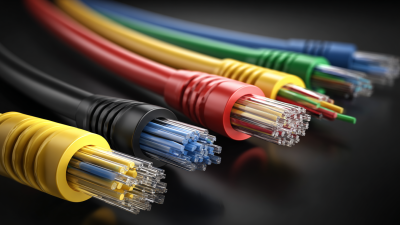
In today's digital world, optical fiber cable plays a crucial role in internet connectivity. More people rely on high-speed internet for both personal and professional use. Unlike traditional copper cables, optical fiber offers superior transmission capabilities. This technology utilizes light for data transfer, making it faster and more efficient.
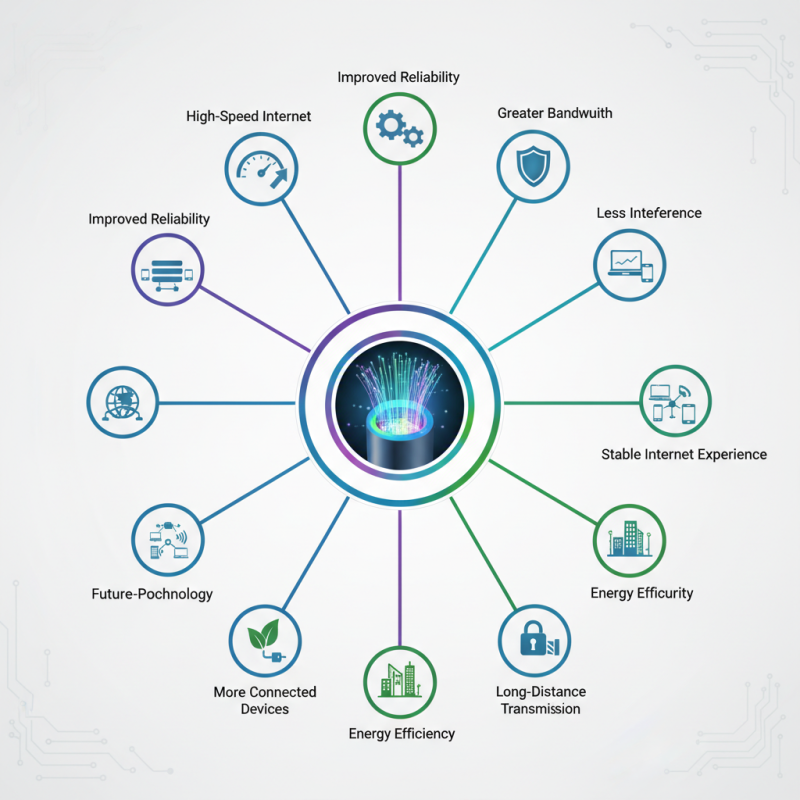
The benefits of optical fiber cable extend beyond speed. Improved reliability is a significant advantage. Fiber connections are less prone to interference from external factors. This leads to a more stable internet experience. Greater bandwidth capabilities also mean more devices can connect simultaneously without slowdowns.
However, it is essential to consider the installation and maintenance costs of optical fiber. While it offers many advantages, setting up the infrastructure can be challenging. Not all areas may have easy access to this technology. Therefore, while optical fiber cable presents numerous benefits, there are factors to weigh before making the switch.
Advantages of Optical Fiber Over Traditional Copper Cables in Data Transmission
Optical fiber cables are revolutionizing internet connectivity. Unlike traditional copper cables, they offer numerous advantages in data transmission. Optical fibers are made of thin strands of glass or plastic. They transmit data as light pulses. This allows for faster speeds and higher bandwidth capabilities.
A study by the Fiber Optic Association revealed that fiber optics can transmit data over longer distances without signal loss. Companies can achieve speeds up to 1 Gbps. In contrast, copper cables struggle with distance and speed. They are limited, especially as demand for higher speeds grows.
Tips: When upgrading your network, consider future needs. Optical fiber can handle increasing traffic better than copper. Assess your location; installation might differ based on building structures.
Moreover, fiber cables are immune to electromagnetic interference. This is a significant benefit in urban areas with a lot of wireless devices. However, the installation process can be complex. It may require skilled technicians and more investment upfront. Yet, the long-term savings in maintenance and performance are often worth it.
Top 10 Benefits of Optical Fiber Cable for Internet Connectivity
This bar chart illustrates the top ten benefits of using optical fiber cables for internet connectivity over traditional copper cables. Each benefit is scored based on its importance and effectiveness in enhancing data transmission and overall performance.
Impact of Optical Fiber on Internet Speed and Bandwidth Capacity
Optical fiber cables significantly enhance internet speed and bandwidth capacity. According to industry reports, fiber-optic technology can achieve speeds of up to 1 Gbps or more. This speed is crucial for modern digital demands. As data consumption continues to rise, high bandwidth ensures seamless streaming, gaming, and remote work.
The impact of optical fiber on bandwidth is profound. Traditional copper cables offer limited bandwidth, often struggling at 100 Mbps. In contrast, fiber optics can support speeds in the multi-gigabit range. This capability allows multiple users to connect simultaneously without a noticeable slowdown. Yet, not all areas have equal access to fiber networks, highlighting a digital divide.
Despite its advantages, there are challenges to widespread fiber adoption. Installation can be expensive and time-consuming. Moreover, existing infrastructure in many regions remains outdated. Progress is often hindered by regulatory hurdles and local policies. As we move into an increasingly connected future, bridging this gap will be critical.
Top 10 Benefits of Optical Fiber Cable for Internet Connectivity
| Benefit |
Description |
Impact on Speed |
Maximum Bandwidth Capacity |
| Higher Speed |
Optical fiber allows for faster data transmission compared to copper cables. |
Up to 1 Gbps |
Up to 100 Gbps |
| Longer Distance |
Fiber optics can transmit signals over much longer distances without loss of quality. |
Over 100 km |
N/A |
| Higher Bandwidth |
Optical fibers have a greater capacity for data transmission compared to other media. |
Scalable up to 1 Tbps |
Over several Tbps |
| Improved Security |
Difficult to tap into, providing a more secure transmission medium. |
N/A |
N/A |
| Less Interference |
Fiber is immune to electromagnetic interference, ensuring stable connectivity. |
N/A |
N/A |
| Lightweight and Flexible |
Easier to install and manage than traditional copper cables. |
N/A |
N/A |
| Cost-effective over Time |
Although installation might be higher, maintenance costs are lower. |
N/A |
N/A |
| Future-proof Technology |
Scalable infrastructure to meet increasing data demands. |
Expandable as needed |
N/A |
| Environmental Resilience |
Better performance in harsh weather conditions compared to copper. |
N/A |
N/A |
| Enhanced Video and Gaming Experience |
Supports high-definition content and online gaming with minimal latency. |
Instantaneous loading times |
N/A |
Fiber Optics and Security: Reduced Risk of Interception and Cyber Threats
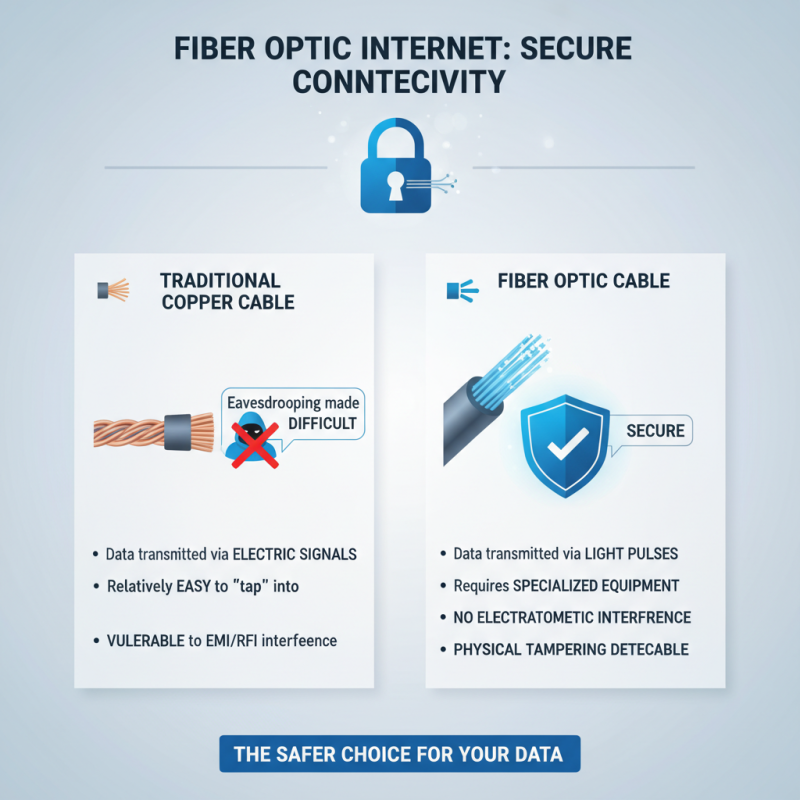
Fiber optic cables offer significant advantages in terms of security for internet connectivity. Their design makes it difficult for hackers to intercept data without detection. Unlike traditional copper cables, fiber optics transmit data using light. This characteristic minimizes the risk of signal theft, as accessing the light signals requires specialized equipment and technical knowledge.
When considering security, remember that proper installation is crucial. Ensure that fiber optic cables are installed in secured pathways. This minimizes exposure to potential physical tampering. Regularly check connections and the integrity of cables. This will help maintain a secure communication network and protect sensitive data.
Another benefit is that fiber optics emit no electromagnetic interference. This feature makes it nearly impossible for attackers to eavesdrop on the signals. However, even with these advantages, it's essential to remain vigilant. Implementing additional security measures, such as encryption, can provide further protection against potential cyber threats. Evaluate your security protocols periodically, and don’t hesitate to make changes when necessary.
Cost-Effectiveness of Optical Fiber in Long-Term Internet Infrastructure
The cost-effectiveness of optical fiber in long-term internet infrastructure is undeniable. According to a report by the International Telecommunication Union, optical fiber can reduce operational costs by up to 50% compared to traditional copper cables. This is primarily due to lower maintenance needs and enhanced durability. Optical fibers are less susceptible to environmental factors, meaning fewer network outages and repair expenditures.
In the long run, the initial investment in optical fiber pays off. The U.S. Department of Energy states that optical fiber systems can support higher data transmission rates. This capability reduces the need for frequent upgrades. Many businesses report increased bandwidth efficiency, which translates into better service for customers. As digital demands grow, optical fiber becomes a more sustainable choice.
Yet, some challenges remain. The installation of optical fiber can be expensive and labor-intensive. Public organizations struggle with budget constraints. There may be a temptation to stick with cheaper solutions. However, they must consider long-term costs. The upfront investment must be viewed against ongoing savings and improved performance. Optical fiber has the potential to offer remarkable returns if properly evaluated.
Environmental Benefits of Optical Fiber Cables in Telecommunications
Optical fiber cables have become a key player in telecommunications. They use light to transmit data, resulting in faster speeds and better efficiency. One major benefit is their lower environmental impact compared to traditional copper cables. Optical fibers require less energy for data transmission. This leads to reduced greenhouse gas emissions.
Another notable aspect is their longevity. Optical fiber cables last longer than copper, reducing waste. They are less likely to degrade over time, resulting in fewer cable replacements. However, the manufacturing process of fiber cables still poses concerns. Production may involve energy-intensive methods and certain chemicals. Addressing these issues is crucial for sustainable growth in the industry.
Furthermore, optical cables can facilitate renewable energy technologies. They support smart grids and other advancements. These systems help monitor energy use, improving efficiency and reducing waste. Still, it is essential to consider the broader impact of deploying fiber networks. Balancing technological advancement with environmental responsibility remains an ongoing challenge.