Top 5 Tips for Choosing the Best Fiber Cables?
Choosing the right fiber cables is crucial for achieving optimal network performance. Fiber cables provide high-speed internet and ensure reliable connectivity. However, not all fiber cables are created equal. The market offers a variety of options, making the selection process daunting.
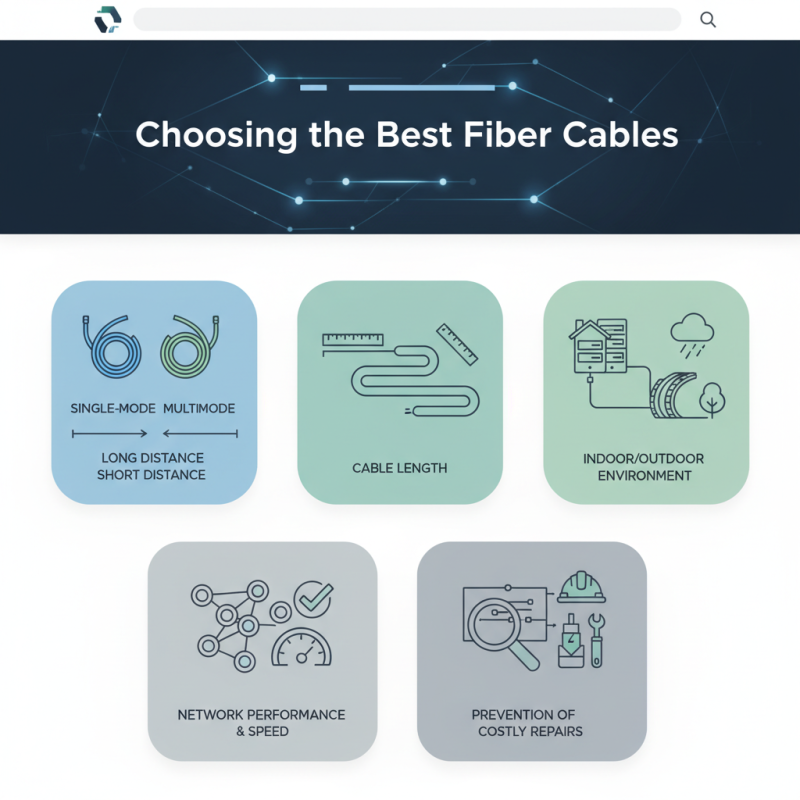
When considering fiber cables, it's important to think about your specific needs. The length of the cable, type of fiber, and installation environment play significant roles. For instance, indoor and outdoor cables have distinct requirements. A poorly chosen cable can lead to performance issues and costly repairs.
Many users overlook these factors, leading to frustrations later on. Understanding the differences between single-mode and multimode fiber cables is essential. This knowledge helps ensure you make an informed choice, ultimately enhancing your network's performance. The right fiber cables can make a significant difference in speed and reliability, contributing to a robust and efficient communication system.
Understanding Different Types of Fiber Cables and Their Applications
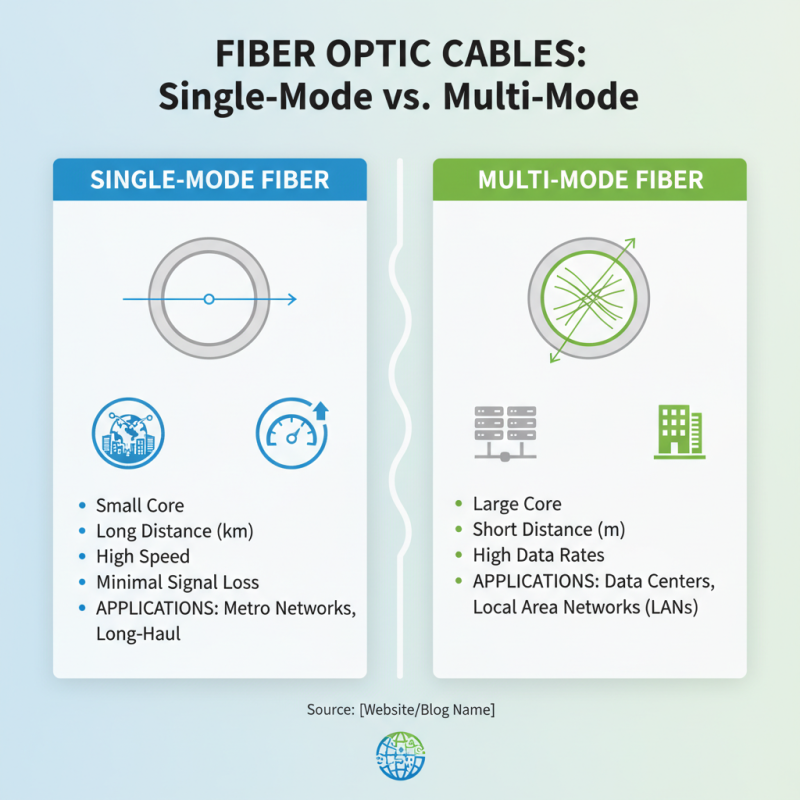
Understanding different types of fiber cables is essential for making informed choices. There are two main types: single-mode and multi-mode fibers. Single-mode fibers have a small core size, allowing for high-speed communication over longer distances. They are ideal for use in metropolitan networks that require minimal signal loss. Multi-mode fibers, with a larger core, support shorter distances and higher data rates. They are often used in data centers and local area networks.
When selecting the best fiber cable, consider your application needs. For example, if you require long-distance communication, single-mode is preferable. However, if your setup involves a short range and high bandwidth, multi-mode could be the better fit. There’s a balance to strike between cost and performance; sometimes, cheaper cables can lead to issues later.
Installation requirements also matter. Some areas may not need high-performance cables. A more straightforward setup might suffice. It's crucial to evaluate your environment and future needs. Fiber cables can be a long-term investment; think about scalability. The right choice now can prevent future headaches.
Evaluating Fiber Cable Specifications: Core Diameter and Mode Types
When evaluating fiber cable specifications, core diameter and mode types are pivotal factors. Core diameter directly influences signal transmission. Single-mode fibers have a smaller core, typically around 9 microns, allowing light to travel through a single path. This results in less signal loss over longer distances, making them ideal for expansive networks. According to industry reports, single-mode cables can effectively transmit data over distances exceeding 40 kilometers.
In contrast, multimode fibers feature larger cores, usually 50 or 62.5 microns. They support multiple light paths, which may lead to modal dispersion. This makes them suitable for shorter distances, typically within a few hundred meters. IT World stated that multimode fibers are more economical than single-mode options, but the trade-off is limited range.
Important tips include assessing the network’s needs. If long-distance transmission is required, opt for single-mode cables. For shorter applications, multi-mode may be sufficient. Also, consider the bandwidth requirements. Data transmission rates increase with core diameter, yet specific applications might not necessitate the highest capacity. Understanding these specifications can lead to informed decisions. Always reflect on how varying core sizes may affect performance in real-world scenarios.
Top 5 Tips for Choosing the Best Fiber Cables
| Specification |
Single-Mode Fiber |
Multi-Mode Fiber |
| Core Diameter |
9 µm |
50 µm / 62.5 µm |
| Maximum Distance |
Up to 80 km |
Up to 400 m (OM4) |
| Bandwidth |
High (e.g. 100 Gbps and beyond) |
Moderate (e.g. 10 Gbps for 400 m) |
| Cost |
Higher |
Lower |
| Use Cases |
Long-distance communication |
Short-distance networks |
Assessing Transmission Speed: The Importance of Bandwidth in Fiber Cables
When selecting fiber cables, transmission speed is critical. Bandwidth serves as a key indicator of a cable's performance. High bandwidth allows for faster data transfer, which is essential in today's data-driven world. According to the International Telecommunication Union (ITU), fiber optic cables can support bandwidths over 100 Gbps. This speed is vital for applications like streaming, gaming, and cloud services.
A study by the Fiber Broadband Association reveals that businesses using high-bandwidth fiber connections experience a 37% increase in operational efficiency. These benefits translate into lower latency and better performance for end-users. Choosing the right fiber cable ensures that your network meets current and future demands.
However, it's essential to assess the real-world conditions of your network. Not all locations can support ultra-high-speed connections. Environmental factors and infrastructure can limit performance. Understanding these limitations will help refine your choice. Prioritize applications that require high bandwidth but remain aware of potential obstacles. This balance can lead to more informed decisions about fiber cable investments.
Considering Environmental Factors: Durability and Resistance Ratings
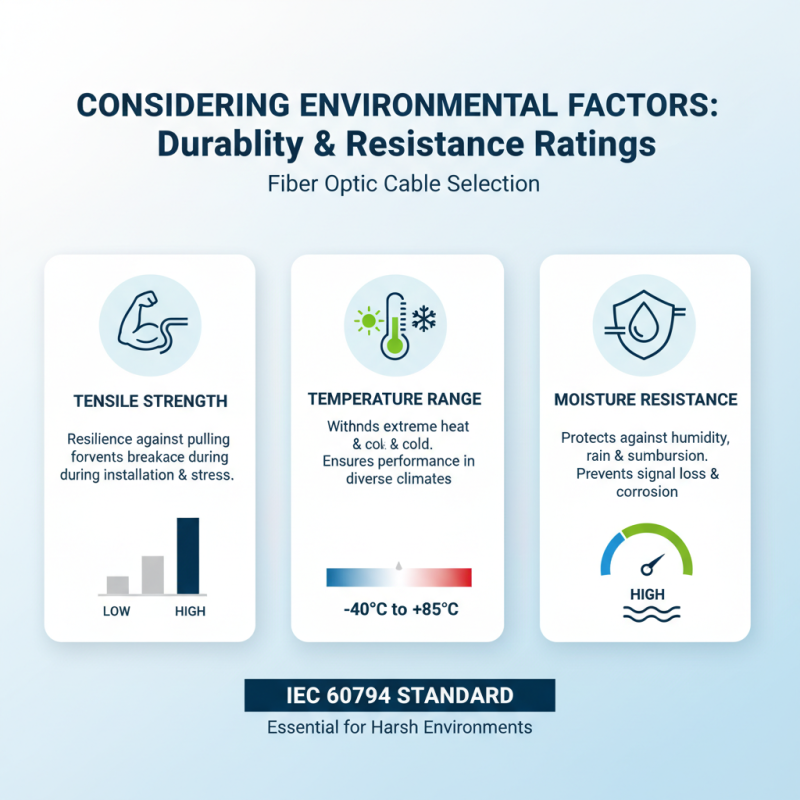
When selecting fiber cables, environmental factors play a crucial role. Durability and resistance ratings are essential for ensuring your cables can withstand various conditions. According to the IEC 60794 standard, fiber optic cables can be evaluated based on their tensile strength, temperature range, and moisture resistance. Cables designed for harsh environments should have high ratings in these areas to prevent failures.
For instance, a study from the IEEE indicates that cables with a moisture resistance rating of at least IP67 can endure even the most challenging weather patterns. This durability minimizes maintenance costs and downtime. On the other hand, not all cables meet these rigorous standards. Selecting low-rated cables can lead to frequent replacements and operational issues. It's crucial to consider these ratings seriously.
Resistance to chemical exposure is another important aspect. In industrial settings, cables might be exposed to various chemicals. A report from the Optical Society highlights that cables with chemical resistance ratings have a significantly longer lifespan. Failing to account for these factors can result in subpar performance and unexpected expenses. Ensuring that your fiber cables meet these environmental requirements is vital for long-term reliability.
Analyzing Cost-Effectiveness: Initial Investment vs. Long-Term Benefits
When choosing fiber cables, understanding the cost-effectiveness is crucial. Initial investments can seem high, yet the long-term benefits often outweigh these costs. According to a report from the Fiber Broadband Association, fiber networks can reduce operational costs by up to 30% over time. This highlights the importance of analyzing not only the upfront costs but also the durability and performance that fiber provides.
Consider your specific needs when selecting fiber cables. High-quality cables can ensure better speeds and fewer outages. Investing in superior materials might involve higher initial costs, but they often lead to lower maintenance expenses down the line. Tip: Look for cables that offer a lifetime warranty. This can be a strong indicator of the quality and reliability of the product.
Furthermore, evaluate the installation costs. Sometimes, choosing cheaper cables can lead to higher labor expenses. A survey indicated that approximately 58% of businesses faced unexpected charges due to installation issues with lower-grade cables. Tip: Budget for skilled installation professionals, as they may save you money in the long run. An intelligent choice will balance initial investments with effective, long-lasting solutions.