Top Maocai Business Expansion Strategies for Global Buyers
Global buyers are showing growing interest in Maocai, a spicy Sichuan food concept built around simmered ingredients, customizable portions, and fast service. However, international growth requires more than copying a popular menu. It demands careful market research, disciplined sourcing, and a clear understanding of local dining habits.
Foodservice analyst David Henkes offers a useful principle: “A successful concept must fit the customer, not only the recipe.” This idea guides the Maocai Business Expansion strategies discussed in this article. A buyer in Singapore may prefer lighter spice and seafood options, while a customer in Germany may value ingredient transparency, portion consistency, and allergen information. Small details matter. Clear menu photographs help. Standardized broth preparation helps more.
Strong operators usually test demand through a limited menu, a temporary kiosk, or a delivery-only pilot. They measure repeat orders, preparation time, food waste, and customer feedback. Then they adjust. Not every assumption survives contact with the market. That is normal.
Reliable expansion also depends on approved suppliers, documented food-safety procedures, staff training, and legally compliant labeling. Regional partnerships can reduce cultural mistakes, but excessive adaptation may weaken the brand’s identity. Finding that balance is difficult.
This guide examines practical methods for selecting markets, adapting menus, controlling costs, building supply networks, and protecting customer trust. The process will not be perfect. Still, thoughtful testing can turn a flavorful local model into a credible international business.
Define Maocai in China’s RMB596.8B Hot-Pot Market (iiMedia, 2023)
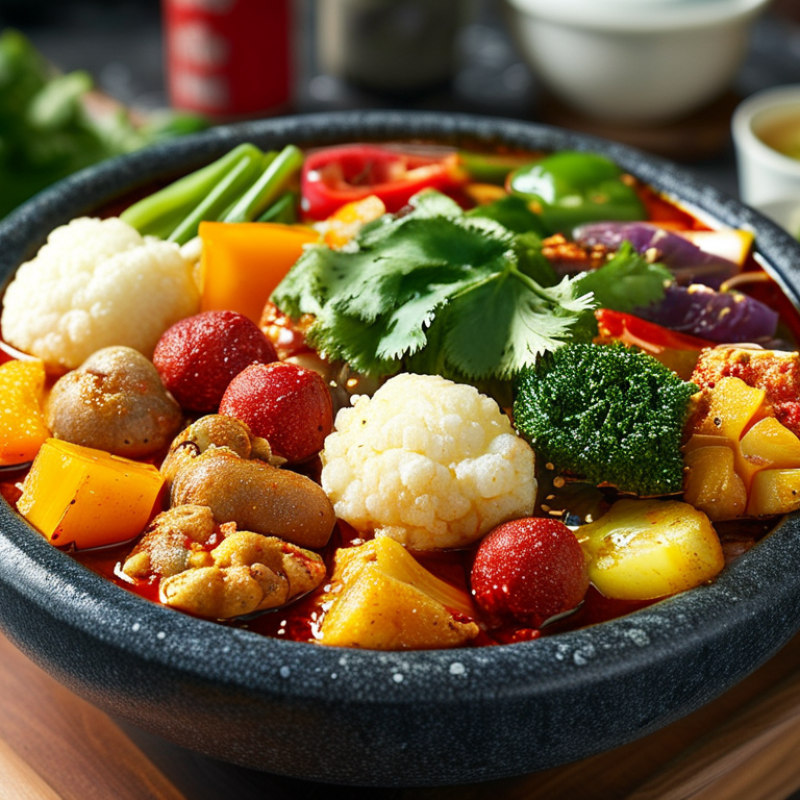
Maocai is a Sichuan-style meal where selected ingredients are cooked in seasoned broth and served in one bowl. Unlike shared hot pot, it offers individual portions, faster service, and clearer cost control. Customers can choose vegetables, noodles, tofu, meat, and spice levels before cooking begins. The format suits busy urban areas and takeaway channels. It also creates a practical entry point for global buyers studying China’s hot-pot sector.
iiMedia reported China’s hot-pot market at RMB596.8 billion in 2023. This figure describes the wider market, not Maocai alone. That distinction matters when evaluating demand, pricing, and expansion potential. Buyers should test local preferences with a small menu and transparent ingredient pricing. A useful pilot may include a visible kitchen, portion scales, temperature records, and reliable cold-chain delivery. Customers often notice texture before presentation. Noodles can become soft quickly, while leafy vegetables lose freshness within minutes. That detail matters.
International expansion requires more than copying a spicy recipe. Operators must adapt seasoning, portion sizes, allergen information, and cooking procedures to local food-safety rules. Some customers may prefer mild broth, while others expect stronger regional flavors. Our assumptions can be wrong. A successful trial should measure repeat orders, waste, preparation time, and customer complaints. These records provide stronger evidence than early enthusiasm. Maocai can scale efficiently, but only when procurement discipline and cultural understanding develop together.
Top Maocai Business Expansion Strategies for Global Buyers
Maocai is a Chinese spicy hot-pot meal served in an individual bowl, combining hot-pot ingredients with a customizable broth. In 2023, China’s hot-pot market was valued at RMB 596.8 billion.
Expansion insight: Global buyers can evaluate maocai opportunities through localized menu adaptation, standardized ingredient sourcing, and scalable single-portion service models. The market-size figure provides context for the category’s commercial potential rather than representing any individual company or brand.
Source: iiMedia Research, 2023. Market value refers to China’s overall hot-pot market.
Select Launch Countries Using UN DESA 2024 Diaspora and QSR Data
Choosing launch countries for maocai requires more than population size.
UN DESA’s International Migrant Stock 2024 estimates 304 million international migrants worldwide. These communities can reveal existing familiarity with spicy broths, shared dining, and regional Chinese flavors.
Map migrant origins by country and major city. Then compare them with QSR indicators. Euromonitor International’s 2024 Consumer Foodservice data tracks outlet growth, transaction value, and limited-service demand across national markets. A country with strong migrant density but weak QSR spending may require smaller stores, delivery testing, or simplified menus. Data alone is not enough.
Test carefully.
That matters.
Select cities where diaspora clusters, student districts, and office workers overlap. Use menu trials to measure repeat visits, preparation time, and acceptable spice levels. QSR research often emphasizes speed, convenience, and value, yet maocai depends on customization and fresh preparation. This creates a practical tension.
A pilot should record average ticket size, queue length, ingredient waste, and delivery complaints. Local surveys can also identify unfamiliar ingredients or dietary expectations. My view is provisional: diaspora demand may open the door, but it may not sustain daily traffic. UN DESA figures describe population movement, not purchase intent. Euromonitor figures describe market conditions, not cultural acceptance. Builders should treat both as decision tools, then verify assumptions through controlled local trials.
Validate Demand Against Global Hot-Pot CAGR Forecasts (Grand View Research)
Global buyers should test maocai demand against wider hot-pot growth, not rely on enthusiasm alone. Grand View Research estimates the global hot-pot market will expand at an 8.1% CAGR from 2024 to 2030. Its analysis also identifies changing foodservice habits and rising interest in regional flavors as important growth factors. This forecast offers a useful market ceiling, but maocai may not follow it exactly. Consumer awareness, local spice preferences, and restaurant pricing can change results.
Start with small, measurable pilots in cities showing strong hot-pot consumption. Track weekly orders, repeat purchases, broth preferences, ingredient waste, and average delivery time. A practical test might compare mild, spicy, and vegetarian bowls across three neighborhoods. The data should be reviewed against local restaurant and takeaway reports, not only global forecasts. Euromonitor and national foodservice statistics can help validate dining frequency and disposable-income trends.
Be careful with optimistic projections. An 8.1% category CAGR does not guarantee equal growth for every maocai operation. Import costs, cold-chain reliability, labeling rules, and kitchen training may reduce margins. I would also test portion size again; early assumptions are often wrong. Buyers should update forecasts quarterly, document customer feedback, and delay major expansion until repeat demand remains stable for several months. Forecasts inform decisions. They do not replace local evidence.
Secure HACCP, Codex, FDA, and EU Label Compliance Before Importing
Global Maocai Expansion Requires Label Compliance
Global buyers should treat compliance as a product requirement, not a final packaging task. HACCP documentation should explain hazard controls for broth, spices, meat, and vegetables. Ask for process-flow charts, critical control limits, monitoring records, and corrective actions. Keep these files beside batch numbers and laboratory reports.
Codex guidance can support ingredient descriptions, hygiene controls, and food information reviews. However, Codex does not replace destination-country law. FDA requirements may affect facility registration, allergen declarations, nutrition panels, and import records. EU labels often require local-language information, clear allergen emphasis, net quantity, storage instructions, and responsible operator details. Check every package, even small seasoning sachets.
Small errors cause expensive delays. A missing allergen statement can stop clearance. An unreadable lot code can weaken recall control. Test the printed label at actual shipping size. Review translations with a qualified food specialist. Do not rely on a supplier’s old template. Regulations and recipes change.
A spreadsheet can still miss a detail. That is the uncomfortable part. Buyers should compare the approved recipe, laboratory results, carton artwork, and customs documents line by line. Keep signed versions and review them before every shipment. Supplier confidence helps, but independent verification is safer.
Scale with Franchise KPIs: Food Cost, Labor, Rent, and Payback Targets
Global buyers should treat maocai expansion as a measured operating system, not a store-count race. In a pilot market, set food cost near 30–35% of sales, then test the range against local ingredient prices. Use recipe cards, portion scales, and daily waste logs to protect the target. One missed yield assumption can distort the whole model. Labor often deserves a 15–20% sales target, but opening hours and wage rules can shift it quickly. Build schedules from hourly demand, not habit. At a busy dinner period, one extra staff member may improve service but weaken payback. That trade-off needs evidence.
Rent and occupancy expenses should usually stay around 8–12% of sales, although high-traffic districts may exceed this level. Model rent, utilities, maintenance, and local taxes together. Then compare conservative, expected, and strong sales cases. A practical payback target is 24–36 months, measured from total setup investment rather than equipment alone. Review weekly during launch and monthly after stabilization. Track sales per labor hour, waste value, average ticket, repeat visits, and cash conversion. Early forecasts are often too optimistic. I have seen attractive spreadsheets fail because delivery fees, training time, or seasonal demand were ignored. Leave a contingency reserve and document every assumption. Local accounting advice and operational audits can challenge weak numbers before expansion multiplies them.