What are Control Components and Their Applications?
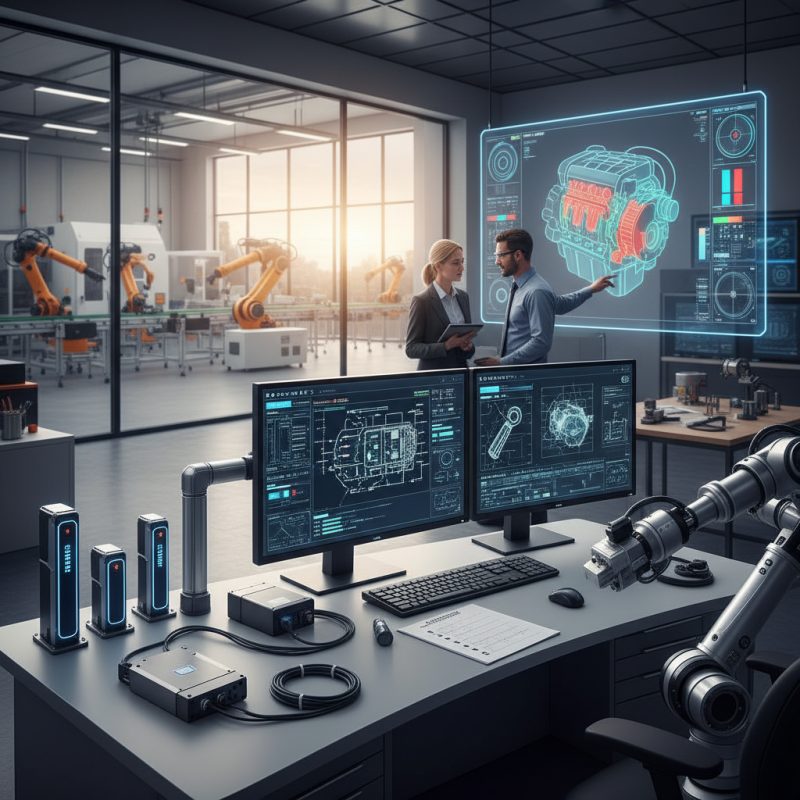
Control Components play a vital role in various industries. They help in monitoring and regulating systems, ensuring efficiency and safety. These components include sensors, controllers, and actuators. Each has a unique function, but all aim to enhance control in automation.
In manufacturing, for example, Control Components monitor machinery. They detect discrepancies and maintain optimal performance. This prevents costly downtime. However, relying on technology can sometimes lead to overconfidence. Some may overlook manual checks, which are still essential for reliable operation.
Applications of Control Components extend to sectors like automotive and aerospace. These components enhance safety by monitoring critical systems. Yet, the complexity of integration poses challenges. Troubleshooting these systems may require deep expertise. The balance between automation and human oversight remains a critical consideration.
Overview of Control Components in Industrial Automation
Control components play a vital role in industrial automation. They regulate processes, ensuring smooth operations. These components can include sensors, actuators, and controllers. Each element contributes to the overall efficiency of a system. Sensors detect environmental changes, while actuators perform actions based on controller input. This integration enhances productivity.
Tips: Always verify sensor accuracy. Faulty readings can lead to errors. Regular maintenance is critical for reliability.
The applications of control components are vast. They are used in manufacturing, robotics, and energy management. In manufacturing, they help maintain consistent product quality. Robotics relies on precise control for tasks like assembly and painting. Energy management systems utilize control components to optimize consumption.
Tips: Monitor actuator performance regularly. Over time, wear can reduce effectiveness. Consider implementing a routine check-up system.
Despite their importance, challenges exist. Component failures can disrupt operations. Human errors during setup may lead to unexpected outcomes. Continuous learning and adaptation are essential in overcoming these hurdles. Ensure training is updated frequently for operators and technicians. This practice creates a more resilient automation environment.
Types of Control Components: Sensors, Actuators, and Controllers
Control components are essential in automation and industrial systems. They consist primarily of sensors, actuators, and controllers. According to a recent industry report by MarketsandMarkets, the global sensor market is projected to reach $257 billion by 2025, driven by advancements in smart technologies. Sensors detect changes in the environment, supplying data to controllers for further processing.
Actuators, on the other hand, are responsible for carrying out commands from controllers. They translate electrical signals into physical actions. A study shows that the actuator market is growing at a CAGR of 6.2% over the next few years. This growth highlights the importance of precise actuator functions in various applications, such as robotics and manufacturing.
**Tips:** Choose sensors that match your application needs. Always consider installation requirements. Regular maintenance of actuators can prevent unexpected failures. Despite the technology's reliability, human errors in calibration often lead to inefficiencies. It's crucial to check system setups periodically for optimal performance.
Key Applications of Control Components in Manufacturing Processes
Control components play a vital role in manufacturing processes. These elements include sensors, actuators, and controllers that ensure machinery operates smoothly. For example, sensors collect real-time data about temperature, pressure, and flow rates. This data helps operators adjust processes effectively.
In assembly lines, control components help maintain efficiency. They synchronize machines and monitor product quality. A small sensor failure can halt production, showcasing the need for precise functioning. Moreover, improper calibration of control devices can lead to wastage. Manufacturers must remain vigilant about maintenance.
Quality control is another key application. Control components enable automated inspection. This reduces human error and enhances reliability. However, reliance on automation introduces risks. If not properly managed, faulty systems can cause significant issues. Therefore, continuous training and updates on technology are important for successful implementation.
What are Control Components and Their Applications?
| Control Component | Description | Key Application |
| PLC (Programmable Logic Controller) | A digital computer used for automation of electromechanical processes. | Automated assembly lines |
| SCADA (Supervisory Control and Data Acquisition) | A control system that uses computers and networked data communications to gather real-time data. | Monitoring and controlling industrial processes |
| Sensors | Devices that detect events or changes in the environment and send the information to other electronics. | Temperature monitoring in manufacturing |
| Actuators | Devices responsible for moving or controlling a mechanism or system. | Robotic arms in assembly |
| Control Valves | Valves that regulate the flow of fluids by varying the size of the flow passage. | Fluid control in chemical processes |
| Human-Machine Interfaces (HMI) | User interfaces that allow operators to interact with machines and processes. | Operator control panels in manufacturing |
Market Trends: Growth and Innovations in Control Component Technology
The control component industry is experiencing rapid growth. This growth is driven by increasing automation in various sectors. Smart technologies are now integrated into industrial processes. These innovations enhance efficiency and reduce errors. More manufacturers are adopting advanced control components. They are investing heavily in research and development.
Innovations include advanced sensors and actuators. These devices allow for better monitoring and control. Real-time data collection improves decision-making. However, not all innovations result in immediate benefits. Some technologies may fail to integrate well with existing systems. This can cause delays and additional costs. Manufacturers must carefully consider their needs versus the latest offerings.
Market trends point toward sustainable solutions. Eco-friendly materials and energy-efficient designs are crucial. Consumers want systems that reduce environmental impact. Yet, achieving this balance poses challenges. The demand for innovation can sometimes lead to hasty decisions. Manufacturers need to focus on reliability. Ensuring compatibility with current systems is essential for long-term success.
Statistical Analysis of Control Component Efficiency in Smart Systems
Control components play a pivotal role in smart systems, enhancing their efficiency and performance. Their efficiency can be analyzed statistically, providing insights into how these components function. This analysis helps identify the strengths and weaknesses of various control mechanisms. By understanding these aspects, engineers can design better systems.
Tips: Always collect enough data for your analysis. The more data you have, the clearer your conclusions will be.
When evaluating control component efficiency, sometimes the results can surprise you. A component might perform well under one condition but fail in another. This inconsistency highlights the need for comprehensive testing. Ignoring such variations can lead to suboptimal system design. Engineers must remain aware of these pitfalls.
Tips: Regularly test under varying conditions. Adaptability is vital for any smart system.
Statistical analysis provides a foundation for improvement. However, it's not a one-size-fits-all solution. Each smart system has unique requirements. Therefore, always be ready to refine your approach based on specific needs. This flexibility is essential in achieving higher efficiency.