How to Choose the Right Fiber Cables for Your Network Needs?
In today's increasingly digital world, choosing the right fiber cables is crucial for businesses. As per the latest report from the Fiber Optics Association, more than 70% of IT networks now use fiber optic technology, largely due to its speed and reliability. This growth in demand highlights a need for educated choices in fiber cable selection.
Industry expert Dr. Emily Chen, a leading voice in fiber optic technology, stated, "The right fiber cables can dramatically enhance network performance and scalability." Different types of fiber cables exist, such as single-mode and multi-mode, each suited for specific applications. Understanding key specifications, such as core diameter and bandwidth, is vital for ensuring optimal network functionality.
Selecting fiber cables without thorough research can lead to costly mistakes. For example, using incompatible cables may create bottlenecks or even network failures. It’s important to assess project requirements and future needs, ensuring the chosen cables align perfectly with organizational objectives. Knowledge and insight in this area can guide decisions and pave the way for more efficient and robust networks.
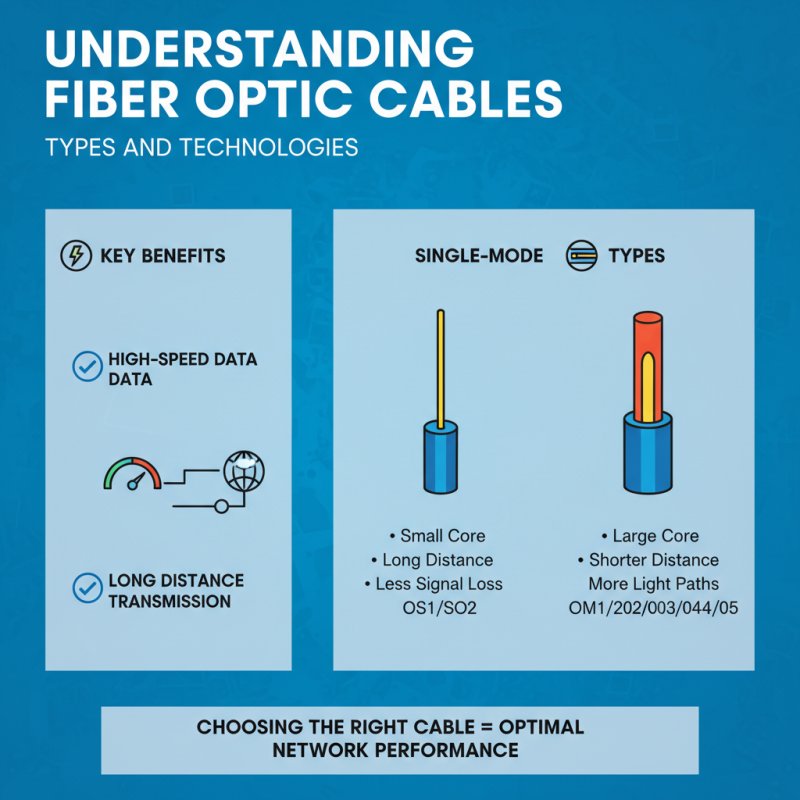
Understanding Fiber Optic Cables: Types and Technologies
Fiber optic cables are vital for modern networks. They provide high-speed data transmission over long distances. Understanding the various types of fiber optic cables is crucial in selecting the right one for your needs.
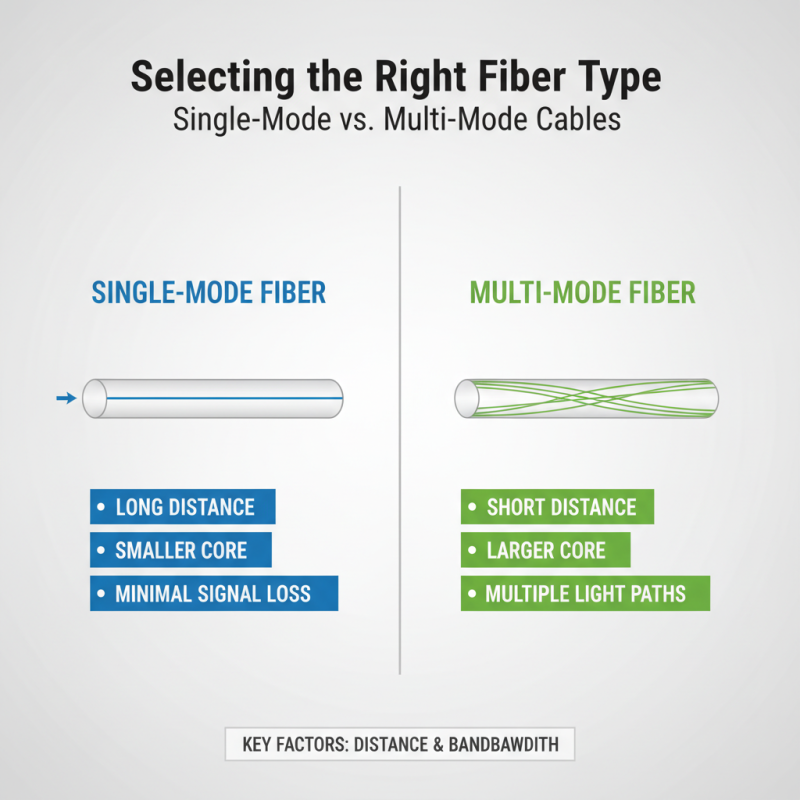
Single-mode and multi-mode fibers are the two primary types. Single-mode fibers have a smaller core diameter. They allow one light mode to travel, which reduces signal loss. A 2022 report from the International Data Corporation (IDC) noted that single-mode fibers are preferred for long-distance telecommunications. Multi-mode fibers, with larger cores, support multiple light modes. They are ideal for shorter distances, typically within buildings. However, signal loss occurs more rapidly in multi-mode cables.
The technology behind these cables also matters. For instance, the rise of multimode OM5 fibers facilitates higher bandwidth applications. They support multiple wavelengths, increasing capacity. This technology is becoming increasingly important, as a report from MarketsandMarkets predicts the fiber optics market will reach $16.3 billion by 2026. Yet, despite their advantages, some may face challenges regarding installation and compatibility. It’s important to evaluate your environment and requirements carefully. Selecting the appropriate fiber optic cable ensures optimal network performance, but it requires understanding the specific technologies available.
Evaluating Network Requirements: Speed, Distance, and Capacity
Choosing the right fiber cables involves understanding your network's specific needs. Evaluating your requirements starts with speed. Reports indicate that 10 Gbps is the standard for most businesses today. However, for data centers or high-traffic environments, 40 Gbps or 100 Gbps cables may be necessary. Skimping on speed can lead to inefficiencies, causing frustrating delays.
Next, consider distance. Single-mode fibers are ideal for long distances, reaching up to 100 kilometers. Multi-mode fibers, while suitable for shorter runs, typically have a limit of around 300 meters. This factor impacts performance significantly. Poor distance choices can degrade signal quality.
Capacity plays a critical role as well. Different cables support varying bandwidths. For instance, OM5 cables can handle multiple wavelengths, enhancing capacity. A careful evaluation can prevent over-specifying or under-specifying needs, which can lead to wasted resources or insufficient bandwidth. Ensuring the right fiber choice requires careful thought and sometimes trial and error.
Selecting the Right Fiber Type: Single-Mode vs. Multi-Mode Cables
When deciding between single-mode and multi-mode fiber cables, several factors come into play. Single-mode fibers are designed for long-distance transmissions. They use a smaller core, allowing light to travel straight down the fiber. This minimizes signal loss and distortion.
Multi-mode fibers, on the other hand, have a larger core and are ideal for shorter distances. They support multiple light paths, which means they can transmit data over shorter runs efficiently. However, this can lead to modal dispersion, affecting signal quality as distance increases. If your network needs are local, multi-mode may suffice. For extensive connections, consider single-mode.
Both types have their pros and cons. It’s crucial to analyze your specific requirements. Network speed, distance, and cost should guide your choice. Reflect on how future upgrades might impact your decision. Choosing the right fiber involves careful consideration of the environment and potential growth of your network. Take time to weigh your options before investing.
Assessing Environmental Factors: Indoor vs. Outdoor Fiber Cable Use
When choosing fiber cables for your network, the environment plays a crucial role. Indoor and outdoor settings impose different challenges. Indoor cables typically feature a lightweight design. They are flexible and often made of less durable materials. These cables also need to meet fire safety standards. Using indoor cables in outdoor setups could lead to failures.
Outdoor fiber cables are engineered for harsh conditions. They often include additional protective layers, such as UV resistance and water-tight enclosures. These features help them withstand extreme temperatures and moisture. However, some outdoor cables could be over-engineered for specific indoor situations, leading to unnecessary costs. A careful assessment of the environment is essential.
A mismatch between cable types and uses could cause significant network issues. A professional evaluation can help determine the appropriate choice. Assessing factors like temperature fluctuations, humidity levels, and potential physical damage is vital. Reflecting on these elements can guide you toward a more reliable network setup.
Considering Installation Needs: Connectivity and Maintenance Options
When choosing fiber cables, installation needs play a crucial role. Consider the environment where the cables will be installed.
Indoor settings may allow for more flexibility in cable choice, whereas outdoor installations require cables that can withstand harsh weather conditions.
Knowing the specific location helps in selecting the right protection levels for your fiber cables. The installation method, whether it’s aerial or underground, also impacts the choice.
Connectivity options should be tailored to your network’s demands.
You will want to evaluate the types of connectors and adapters needed. Some installations require specific configurations to ensure optimal performance.
Maintenance options should not be overlooked. Cables that are easier to access and maintain can save time and money in the long run.
Regular checks and management can prevent issues that might disrupt connectivity.
It’s essential to balance your immediate needs with long-term plans. Sometimes, a cheaper cable can lead to higher maintenance costs.
Opting for the best option requires careful consideration of your network’s future growth.
Always reflect on your choices and be ready to adapt. Decisions made now may not suit future requirements.