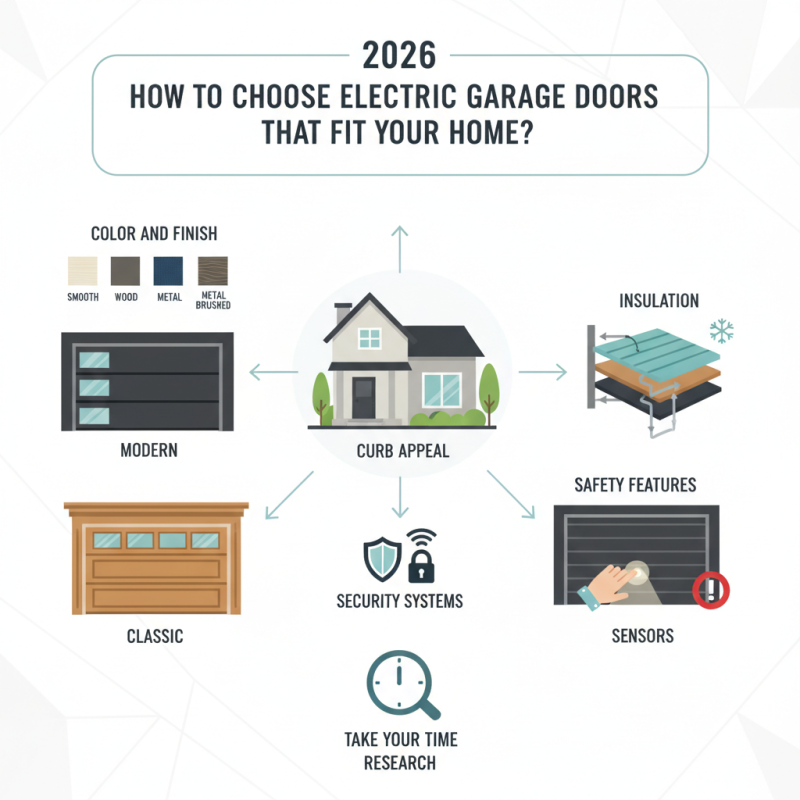
2026 How to Choose Electric Garage Doors That Fit Your Home?
Choosing the right Electric Garage Doors can significantly impact your home's appearance and security. These doors come in various styles and materials. With so many options, selecting one might seem overwhelming.
When considering electric garage doors, think about your home's aesthetic. A modern design might suit contemporary homes, while traditional styles fit classic structures. It’s essential to reflect on the door's color and finish. The right choice enhances curb appeal.
Moreover, functionality matters. Many electric garage doors feature insulation, which can save energy costs. Safety features are also crucial. Look for doors with secure locking systems and sensors. While this process is important, don’t rush it. Take your time to ensure you find the best fit for your needs.
Factors to Consider When Selecting Electric Garage Doors
Choosing the right electric garage door for your home involves several key factors. Start with the size of your garage. Measure the width and height carefully. An improperly sized door can lead to installation issues.
Next, think about climate. Insulated doors can provide energy savings. They help keep your garage warm in winter and cool in summer.
Another important aspect is the material of the door. Different materials have varying levels of durability and maintenance needs. Steel doors are strong, but they can rust. Wooden doors offer aesthetics but may require frequent painting or sealing. Reflect on your priorities: Do you prefer low maintenance, or is design more important?
Consider the security features as well. Some models come with advanced locking systems. Others include smart technology for remote access. Adding these features can enhance safety but may increase costs.
Finally, think about the noise level when selecting a door. Some operate quietly, while others may be loud enough to disturb the neighborhood. Take your time; this is a significant investment for your home.
Types of Electric Garage Doors Available
When it comes to electric garage doors, several types can enhance your home’s security and aesthetics. The most common types include sectional, roller, and tilt-up garage doors. Sectional doors consist of several panels that glide up and down, providing excellent insulation and space efficiency. They are popular for their modern look and versatility.
Roller doors are another option. They roll up around a drum and are ideal for homes with limited space. These doors often come in sleek designs, making them attractive for contemporary homes. On the other hand, tilt-up doors swing open in one piece. They can require more clearance, which some homeowners find inconvenient. Each type has its advantages and drawbacks.
Choosing the right type depends on your specific needs. Consider the space available and the door's style. Remember, it’s important to match the door with your home’s exterior for a cohesive look. Some homeowners overlook this detail. A mismatch can detract from your home's appeal. You want functionality and beauty. Always measure carefully before making a decision. Ensuring a perfect fit can save you from future headaches.
Key Features to Look for in Electric Garage Doors
When choosing electric garage doors, there are key features to consider. Security is paramount. Look for sturdy materials that resist break-ins. A reliable locking system adds an extra layer of safety. Some doors offer smart technology for remote access. This feature can enhance convenience but might complicate the setup process.
Energy efficiency is another important factor. Insulated doors keep your garage temperature stable. This feature can lower energy costs, especially in extreme weather. Keep in mind that aesthetics matter too. A door should complement your home’s style. Examine color options and design. Remember, the right choice should blend form and function.
Consider ease of installation and maintenance. Some models require professional help, which can be costly. Choose a door that you can maintain easily over time. Routine checks are essential for keeping the door operational. Lighting features can enhance visibility in dark areas. However, careless installation may lead to improper functionality, which can be frustrating. Select what suits you best, but reflect on your choices carefully.
How to Measure Your Garage for Door Installation
When measuring your garage for a new electric door, accuracy is crucial. Start by measuring the width and height of the garage opening. Use a tape measure and record the dimensions down to the nearest eighth of an inch. This ensures that the new door fits like a glove. According to the International Door Association, proper measurements can affect up to 25% of installation success.
Consider the headroom available above the door. Many homeowners overlook this aspect. A minimum of 12 inches is ideal for the door's mechanism. Remember to measure the side space as well. You’ll need at least 3 to 6 inches on each side for proper installation.
Tips: Always double-check your measurements. Mistakes can lead to expensive adjustments. Use a helper when measuring tall or wide garages to get an accurate reading. If you're unsure about any part of the process, consulting a professional can help save time and frustration. A small error in measurement could cost you significantly later. Taking these steps can help you avoid common pitfalls in installation.
2026 How to Choose Electric Garage Doors That Fit Your Home? - How to Measure Your Garage for Door Installation
| Dimension | Recommended Size | Notes |
| Standard Garage Width | 8-16 feet | Depends on vehicle size |
| Standard Garage Height | 7-8 feet | Accommodates most vehicles |
| Door Thickness | 1.5-2 inches | For insulation and durability |
| Track Type | Standard or Low Headroom | Based on ceiling height |
| Material Options | Steel, Wood, Aluminum | Choose based on style and maintenance |
| Window Style | Clear, Frosted, Decorative | Affects natural light and aesthetics |
Energy Efficiency and Security Features of Electric Garage Doors
When choosing electric garage doors, energy efficiency and security features are key. Look for doors that have great insulation. An insulated door keeps your garage comfortable year-round. This can help reduce energy costs and save money on heating and cooling. Consider the R-value of the door, which measures thermal resistance. A higher R-value indicates better insulation.
Security is equally important. Installing a door with robust locking systems can deter break-ins. Look for features like rolling code technology. This ensures remote access codes change after each use. Consider doors made with strong materials as well. Steel or reinforced fiberglass can improve security.
However, some features may come at a higher price. It’s essential to find a balance between cost and benefit. The right door may require adjustments and maintenance. Think about the long-term investment. Reflecting on the options available will help you make an informed choice.