Industries
Get direct access to our extensive portfolio of optical products and specialist technical expertise.

Choosing the 2026 Best Machine Spindle for CNC Machines is not a simple horsepower contest. The right choice depends on material, tooling, speed range, cutting depth, and production hours. A spindle that excels in aluminum may struggle with hardened steel. That difference matters.
A Machine Spindle is the working heart of a CNC system. Professor Yusuf Altintas, a leading authority in machining dynamics, has described it as “the heart of a machine tool.” His observation remains practical today. Inside the housing, bearings, motor windings, cooling channels, and the tool interface must work together precisely. A small runout error can appear as visible marks on a finished aerospace component. Excess heat can also shift tool position during long cuts.
This guide examines spindle power, maximum speed, torque curves, bearing design, thermal stability, tool retention, and service support. It also considers real workshop conditions, including dust, coolant, vibration, and uneven maintenance. Numbers alone can mislead. A 24,000-rpm spindle may look impressive, yet a stable 12,000-rpm unit could deliver better results for steel machining.
There is no universal winner. That is the uncomfortable part. Buyers sometimes compare catalog specifications without checking actual cutting loads. We will question that habit and compare suitable spindle types for milling, routing, drilling, and high-speed production. The final decision should come from verified test data, application experience, and the machine builder’s recommendations—not attractive marketing claims.
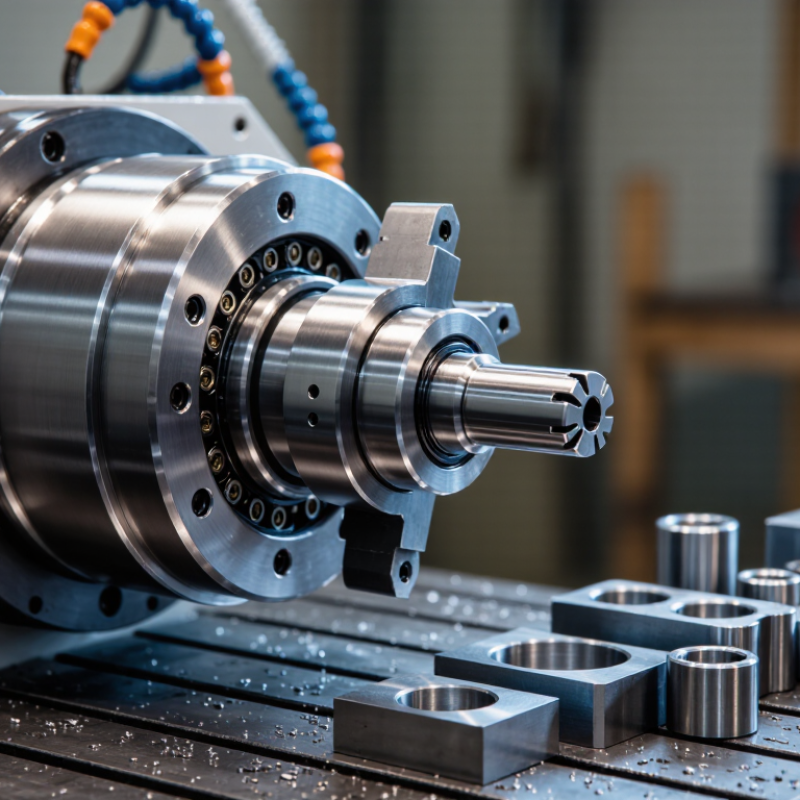
A machine spindle is the rotating heart of a CNC machine. It holds the cutting tool, delivers torque, and controls cutting speed with precision. Inside, bearings, a motor, a tool interface, and cooling systems work together. Even a small imbalance can create vibration, heat, poor surface finish, or premature tool wear.
Spindle selection affects productivity more than many buyers expect. The International Energy Agency reports that electric motor systems use more than 40% of global electricity. The U.S. Department of Energy also estimates that motor-driven equipment consumes about 70% of industrial electricity in the United States. These figures do not describe spindles alone, but they show why efficiency, acceleration, and load control matter.
A spindle that reaches 30,000 rpm may suit aluminum or small tools, yet it can perform poorly during heavy steel cutting. High speed is not automatically better.
Torque curves deserve closer attention. So do runout, bearing design, cooling capacity, tool retention, and duty cycle. ISO 230 testing principles help evaluate machine accuracy, but real production conditions still matter. A workshop with long cutting cycles needs different thermal behavior than a prototype room. In practice, a spindle rated for extreme speed can disappoint when its usable torque drops sharply. That is an easy mistake. Check the power curve, not only the headline rpm. Then compare measured runout, balancing quality, service intervals, and the machine’s actual materials before choosing the best spindle for 2026.
2026 Best Machine Spindle for CNC Machines?
Key Spindle Specifications for Comparing CNC Machine Performance
Choosing a CNC spindle requires more than checking its maximum RPM. In daily machining, usable torque often matters more than impressive speed. A 12,000 RPM spindle may suit steel cutting, while aluminum can demand 18,000 RPM or higher. Match speed, torque, and power to your cutting tools and materials. More power is not always better.
Check spindle taper, bearing quality, runout, cooling, and duty cycle. A suitable taper improves tool retention during heavy cuts. Runout below 0.01 mm supports cleaner finishes and longer tool life. Air cooling can simplify maintenance, but liquid cooling usually controls heat more effectively. Thermal growth still deserves attention. Small temperature changes can affect precision.
An encoder helps maintain stable speed during tapping and demanding operations. Automatic tool changing also saves time, but its cycle speed should match your production needs. Listen for vibration during test cuts. Feel the housing after extended operation. These practical checks often reveal problems hidden by a specification sheet. I have seen high-speed spindles perform poorly when the machine frame lacked rigidity. That lesson is easy to overlook. Compare acceleration, noise, service access, and replacement costs, not only rated power. A spindle that looks perfect on paper may need gentler cutting parameters in real production.
| Specification | Entry-Level CNC Spindle | General-Purpose CNC Spindle | High-Speed CNC Spindle | Heavy-Duty CNC Spindle |
|---|---|---|---|---|
| Typical Power Range | 1.5–3.7 kW | 5.5–11 kW | 7.5–18.5 kW | 15–30 kW |
| Typical Speed Range | 8,000–24,000 rpm | 6,000–18,000 rpm | 18,000–40,000 rpm | 4,000–12,000 rpm |
| Maximum Torque | 0.6–2.0 N·m | 3.0–8.0 N·m | 2.0–6.0 N·m | 12–40 N·m |
| Recommended Materials | Wood, plastics, composites, aluminum | Aluminum, brass, plastics, mild steel | Wood, plastics, composites, aluminum | Steel, stainless steel, cast iron, titanium alloys |
| Typical Tooling | ER11 or ER16 collet system | ER20, ER25, ISO20, or BT30 | ER16, ER20, HSK-E25, or HSK-E32 | BT40, HSK-A63, or larger taper systems |
| Maximum Tool Diameter | Approximately 6–10 mm | Approximately 12–20 mm | Approximately 8–16 mm | Approximately 20–32 mm |
| Runout at Tool Holder | Typically ≤ 0.01 mm | Typically ≤ 0.008 mm | Typically ≤ 0.005 mm | Typically ≤ 0.008 mm |
| Bearing Configuration | Sealed angular-contact or hybrid bearing set | Preloaded angular-contact ceramic or steel bearings | Precision ceramic hybrid bearings | Large preloaded angular-contact bearings |
| Cooling Method | Air-cooled | Air-cooled or liquid-cooled | Liquid-cooled or forced-air cooled | Liquid-cooled |
| Duty Cycle | Intermittent to light continuous duty | Continuous duty for general machining | Continuous duty at high rotational speed | Continuous heavy cutting duty |
| Speed Control | Variable-frequency drive or integrated inverter | Variable-frequency drive with closed-loop option | High-frequency drive with speed feedback | Closed-loop drive with load and thermal monitoring |
| Speed Regulation Accuracy | Approximately ±1–2% | Approximately ±0.5–1% | Approximately ±0.1–0.5% | Approximately ±0.1–0.5% |
| Tool Change | Manual tool change | Manual or automatic tool change | Automatic tool change recommended | Automatic tool change with drawbar monitoring |
| Typical Positioning Application | Desktop routers, engraving, prototyping | 3-axis and 4-axis milling centers | High-speed machining and detailed finishing | Production milling and deep material removal |
| Key Performance Advantage | Low cost, compact size, and simple installation | Balanced torque, speed, precision, and versatility | Fast material removal and excellent surface finish | High torque, rigidity, thermal stability, and cutting capacity |
| Main Selection Limitation | Limited torque and low rigidity for heavy cutting | May require advanced cooling for long production cycles | Lower torque at very low speeds and higher system cost | Higher weight, power demand, cost, and installation requirements |
| Best Selection Priority | Budget, compact dimensions, and light-duty cutting | Balanced performance for varied CNC work | High rpm, low runout, and fine surface quality | Torque, rigidity, thermal management, and production uptime |
2026 Best Machine Spindle for CNC Machines?
Choosing the best spindle starts with the material, not the advertised speed. A fast spindle may cut wood cleanly but struggle with steel. Match spindle torque, power, and speed to the material’s cutting resistance. Aluminum often benefits from moderate speed, sharp two-flute tools, and strong chip evacuation. Steel usually needs lower speed, higher torque, rigid fixturing, and steady coolant control.
Tool size matters too. Small cutters need high rotational speed and minimal runout. Larger tools require stronger bearings and more torque. Check the spindle taper, collet range, cooling method, and duty rating before buying. A 12,000-rpm spindle may suit large cutters, but it cannot replace proper torque. Keep that in mind.
Machining tasks change the decision. Engraving demands low runout and smooth speed control. Roughing needs rigidity and sustained power. Long production cycles require reliable cooling and accessible maintenance. Listen during test cuts. A sharp, consistent sound usually indicates stable cutting, while sudden vibration may signal poor tool holding or excessive depth.
I once chose speed over torque and regretted it. The cutter looked impressive, but aluminum packed around the tool. The spindle was not the only problem; my feeds were poorly matched. That mistake still influences my selection process. Record temperature, surface finish, chip shape, and tool wear during trials. A spindle that performs well on paper may need adjustment in the workshop.
The best machine spindle for CNC machines in 2026 depends on the application, material, and production target. No spindle wins every job. A practical selection starts with cutting force, required speed, tool size, and duty cycle.
High-speed electric spindles suit aluminum, plastics, wood, and small tools. They deliver clean finishes at high revolutions, especially during engraving and detailed 3D machining.
Belt-driven spindles offer useful flexibility for general milling. They can reduce vibration, although belt wear requires regular inspection.
Gear-driven spindles provide stronger torque at lower speeds. They are better for steel, titanium, and heavy roughing operations.
Cooling also changes spindle performance. Air-cooled units simplify installation and maintenance. However, they may transfer more heat during long production cycles. Liquid-cooled spindles control temperature more effectively, especially in enclosed workshops. Their pumps, hoses, and filters add maintenance points. That trade-off is easy to underestimate.
For compact routers, a 12,000–24,000 rpm spindle may be appropriate. Large machining centers often need lower-speed torque and automatic tool changing. Check radial runout, bearing quality, power stability, and service access before choosing. A high power rating alone proves little. Actual cutting tests remain more reliable than a neat specification sheet. In practice, many failures begin with poor tooling or incorrect feeds, not the spindle itself. Reconsider the full system before upgrading one component.
Choosing the best CNC spindle starts with the work, not the catalog. Match spindle power, speed range, torque, tool diameter, and duty cycle to your materials. Aluminum may need high speed, while steel often needs stronger low-speed torque. Check taper size, cooling method, encoder options, and electrical requirements before ordering. A practical choice.
Installation affects accuracy as much as spindle design. Clean the taper, tool holder, and mounting surfaces carefully. Even a small chip can create visible runout. Align the spindle with the machine axis, then tighten mounting bolts gradually and evenly. Verify grounding and configure drive parameters according to the spindle’s technical manual. Run the spindle at low speed first, then increase speed in short stages. Measure vibration, temperature, and sound. My mistake in one setup was trusting a quiet motor; the cutting marks later showed poor alignment.
Maintenance should be measurable. Record operating hours, bearing temperature, vibration levels, and unusual current readings. Inspect tool holders and collets frequently, especially after heavy cutting. Keep coolant clean and prevent moisture from entering air-cooled systems. Check lubrication requirements instead of assuming sealed bearings need no attention. Replace damaged cables promptly. If temperature rises quickly or vibration changes suddenly, stop cutting and investigate. A short inspection can prevent a costly spindle failure. Not every problem is obvious.
Selecting the best CNC spindle depends on the workpiece material, required cutting speed, tool diameter, spindle power, cooling method, and allowable runout. The chart shows typical engineering ranges used when matching spindle specifications to common CNC applications.
High-speed spindles are generally preferred for wood, plastics, and aluminum because smaller cutters benefit from higher cutting speeds. Steel and stainless steel usually require more torque, lower operating speeds, rigid tool holding, and effective heat removal. During installation, verify shaft alignment, collet condition, electrical phase settings, and manufacturer-specified balancing limits. Regular maintenance should include cleaning the taper and ventilation paths, checking vibration and temperature, inspecting bearings, and replacing worn collets.