Best 2 Pin Female Connector Plug for Global Buyers?
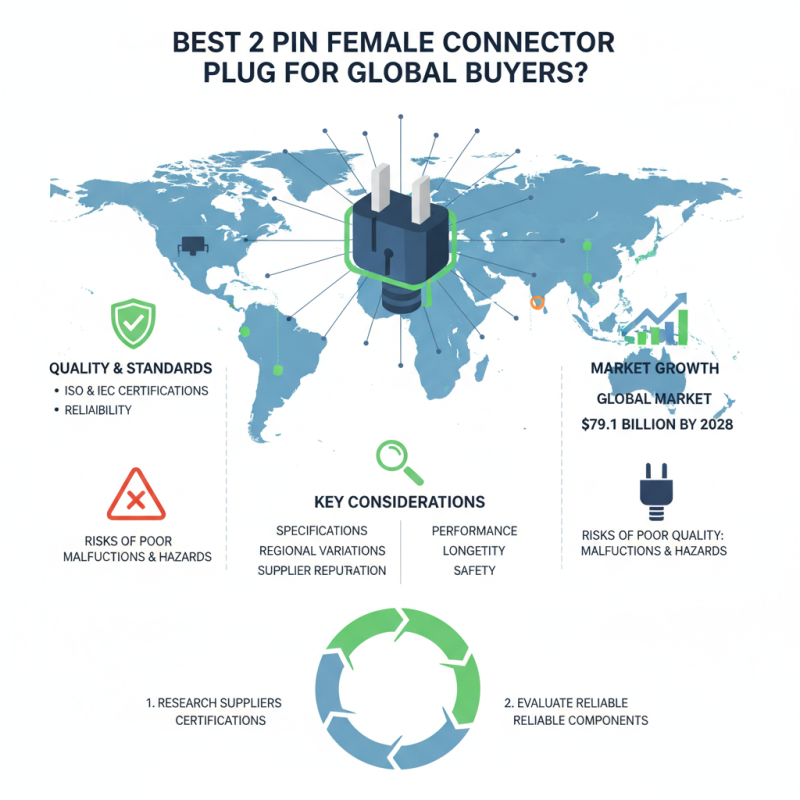
In the ever-evolving landscape of electronic components, the **2 Pin Female Connector Plug** holds significant importance. This plug serves as a vital link in various applications, from household appliances to industrial machinery. Industry reports indicate that the global market for connectors is projected to reach $79.1 billion by 2028, with a steady demand for reliable and efficient components.
Choosing the best **2 Pin Female Connector Plug** requires knowledge of specifications and certifications. Compliance with international standards, such as ISO and IEC, ensures safety and reliability. Many buyers emphasize the importance of quality, as poorly manufactured connectors can lead to malfunctions or even hazards. Unfortunately, some manufacturers cut corners, which can lead to unsatisfactory performance.
Navigating through the numerous available options can be challenging for global buyers. With specifications varying between regions, understanding local preferences is crucial. A well-informed decision can significantly impact overall device performance and longevity. Therefore, evaluating reputable suppliers and examining industry certifications are essential steps in finding the most suitable **2 Pin Female Connector Plug**.
Key Features of High-Quality 2 Pin Female Connectors in Global Markets
When considering high-quality 2 pin female connectors, certain features stand out. Durability is crucial. A good connector withstands wear and tear from repeated use. Materials used in construction often indicate reliability. Look for connectors made from high-quality plastic or metal components that resist corrosion.
Another key feature is the design of the pins. Well-designed pins ensure a tight fit. This tight connection prevents loose contacts, which can lead to performance issues. Consider connectors with locking mechanisms for extra security. A solid fit is essential for consistent electrical flow.
Protection against environmental factors is also vital. Connectors that have built-in waterproofing or dust resistance extend lifespan. In global markets, the demand for connectors that function in various climates continues to rise. It’s essential to evaluate how these connectors perform under different conditions. Potential buyers should be cautious to choose options that match their specific needs.
Best 2 Pin Female Connector Plug for Global Buyers
| Connector Type | Material | Current Rating (Amps) | Voltage Rating (Volts) | Temperature Range (°C) | Contact Resistance (Ohms) |
| 2 Pin Female Connector A | Plastic/Metal | 10A | 250V | -20 to 85 | 0.5 |
| 2 Pin Female Connector B | Nylon | 15A | 300V | -30 to 105 | 0.3 |
| 2 Pin Female Connector C | PVC | 12A | 220V | -10 to 80 | 0.4 |
| 2 Pin Female Connector D | ABS | 20A | 400V | -40 to 90 | 0.2 |
Comparison of Material Types Used in 2 Pin Female Connector Manufacturing
When choosing a 2 pin female connector, the material significantly impacts performance. Common materials include plastic, metal, and rubber. Each material has distinct advantages and drawbacks. For instance, plastic offers lightweight options that resist corrosion but may lack durability in heavy-duty applications.
Metal connectors excel in strength and conductivity. However, they can be heavier and more expensive. Rubber, used for insulation, provides flexibility and will withstand harsh environments. Its downside is the potential for wear over time. Selecting the right material is crucial for the intended application.
Observing production methods is essential. High-quality connectors often undergo rigorous testing. This ensures reliability and safety. However, not all manufacturers follow stringent protocols. Therefore, it’s worthwhile to research and consider the source. Some connectors may appear identical but differ in quality. Regular assessments can lead to better decision-making for buyers.
Global Standards and Certifications for 2 Pin Female Connectors
When selecting a 2 pin female connector, global standards are crucial. These connectors serve various industries, from electronics to automotive. Compliance with international standards ensures safety and interoperability. Buyers should look for certification marks, which indicate adherence to safety guidelines.
Understanding compatibility is also important. Not all connectors will work seamlessly across different regions. Voltage ratings and insulation materials vary widely. Some connectors might perform well in one environment but fail in another. Buyers should consult technical specifications before purchase.
Additionally, recognizing the limitations of different connectors is vital. A high-quality connector may not guarantee flawless performance. Environmental factors, such as humidity and temperature, play a big role. Conducting thorough testing and seeking advice from experts can mitigate risks. Consider the evolving landscape of technology, as outdated connectors may not meet current safety standards.
Market Trends Affecting the Demand for 2 Pin Female Connectors Worldwide
The demand for 2 pin female connectors is influenced significantly by market trends around the globe. As industries increasingly prioritize energy efficiency, the need for reliable connectors has surged. According to a recent report by Allied Market Research, the global connector market is projected to reach $70 billion by 2025, reflecting a compound annual growth rate (CAGR) of 5.5%. This growth drives manufacturers to innovate in design and functionality, adapting to changing user needs.
Moreover, the rise of electric vehicles (EVs) and renewable energy systems is boosting demand. A study by Research and Markets highlights that the EV market alone is expected to witness a CAGR of over 20% through 2030. This growth necessitates robust connector solutions, including 2 pin female connectors, for efficient power transmission. However, while the burgeoning demand is promising, manufacturers occasionally face challenges such as supply chain disruptions and fluctuating material costs.
These dynamics create a complex landscape for buyers. They must navigate various suppliers and evaluate connector specifications carefully. Product reliability continues to be a significant concern, especially in critical applications. As the market evolves, staying informed will undoubtedly play a crucial role in securing the best solutions for specific needs.
Applications and Compatibility of 2 Pin Female Connectors in Diverse Industries
2 pin female connectors play a crucial role in various industries. Their compact design and simple connection method make them ideal for applications ranging from automotive to consumer electronics. According to a report by Research and Markets, the demand for such connectors in the automotive sector is projected to grow by 5% annually. This growth reflects the increasing need for reliable connections in electric vehicles and advanced driver-assistance systems.
In the industrial sector, these connectors help streamline equipment installations. They are widely used in automation, robotics, and control systems. An estimated 60% of industrial machinery incorporates such connectors, largely due to their durability and ease of maintenance. However, not all 2 pin connectors are created equal. Issues like moisture ingress and temperature fluctuations can lead to connector failure, highlighting the need for careful selection.
The versatility of 2 pin female connectors allows for extensive applications in healthcare, lighting, and more. Their compatibility with various cables and devices enhances their utility. Despite their advantages, manufacturers often face challenges in standardization. Variations in specifications can complicate interoperability. Thus, ensuring proper compatibility in diverse applications remains a crucial yet often overlooked concern.